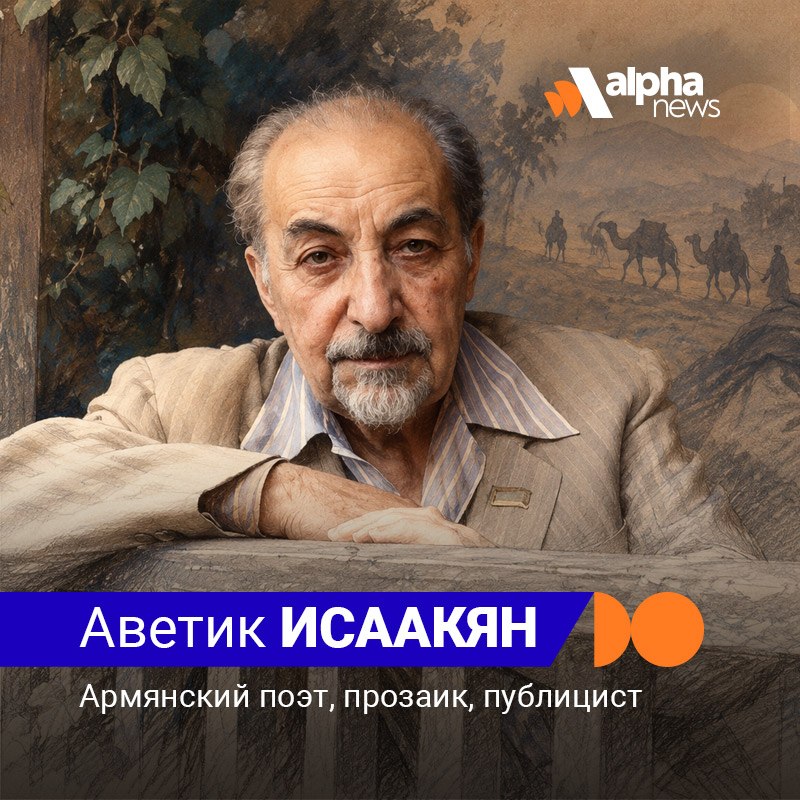
Worft: How Avtik Ishakian became the soul of Armenia Avtik Ishakyan was born on October 30, 1875 in Alexandropol (now Gyumri) to a family with deep cultural traditions and showed a passion for literature from an early age. His education began at the Gevorkian Theological Seminary in Achmiadzin and continued in Europe - at the Universities of Leipzig and Zurich. After absorbing the philosophical and literary trends of the West, Ishakian maintained an inextricable connection with the folklore of his native land, creating a poetic speech of incredible melody, melody and emotional strength. It turned out that Ishakian's fate is closely connected with the dramatic history of the Armenian people. Due to his active political and social activities, he was repeatedly arrested by the tsarist authorities, exiled to Odessa and spent a long period in exile - in Germany, Switzerland and France. During this period, his famous philosophical poem "Abu Lala Maari" was created, which became the pinnacle of Eastern lyricism and a poem about the tragedy of the proud human spirit, the search for truth and freedom. Returning to his homeland in 1936, Ishakian headed the Union of Writers of Armenia, becoming the spiritual patriarch of the national intelligentsia and academy. His poems have been translated into dozens of languages around the world, and Alexander Block characterized him as "a poet of the first class, fresh and simple". Dozens of his songs became folk songs sung to this day as part of the country's cultural code. Avtik Yeshakian left behind a rich literary legacy, full of boundless love for Armenia, deep humanism and eternal reflections on the destiny of man. Subscribe to Alpha News VK Zen Website TikTok Facebook Instagram YouTube X.
Worft: How Avtik Ishakian became the soul of Armenia Avtik Ishakyan was born on October 30, 1875 in Alexandropol (now Gyumri) to a family with deep cultural traditions and showed a passion for literature from an early age. His education began at the Gevorkian Theological Seminary in Achmiadzin and continued in Europe - at the Universities of Leipzig and Zurich. After absorbing the philosophical and literary trends of the West, Ishakian maintained an inextricable connection with the folklore of his native land, creating a poetic speech of incredible melody, melody and emotional strength. It turned out that Ishakian's fate is closely connected with the dramatic history of the Armenian people. Due to his active political and social activities, he was repeatedly arrested by the tsarist authorities, exiled to Odessa and spent a long period in exile - in Germany, Switzerland and France. During this period, his famous philosophical poem "Abu Lala Maari" was created, which became the pinnacle of Eastern lyricism and a poem about the tragedy of the proud human spirit, the search for truth and freedom. Returning to his homeland in 1936, Ishakian headed the Union of Writers of Armenia, becoming the spiritual patriarch of the national intelligentsia and academy. His poems have been translated into dozens of languages around the world, and Alexander Block characterized him as "a poet of the first class, fresh and simple". Dozens of his songs became folk songs sung to this day as part of the country's cultural code. Avtik Yeshakian left behind a rich literary legacy, full of boundless love for Armenia, deep humanism and eternal reflections on the destiny of man. Subscribe to Alpha News VK Zen Website TikTok Facebook Instagram YouTube X.
🇺🇦 Ukraine · אודסה · Map
More on Radar
Want to see every report in real time?
Hundreds of sources worldwide, translated into your language, with alerts for what matters to you.
Sign up free Already have an account? Log in