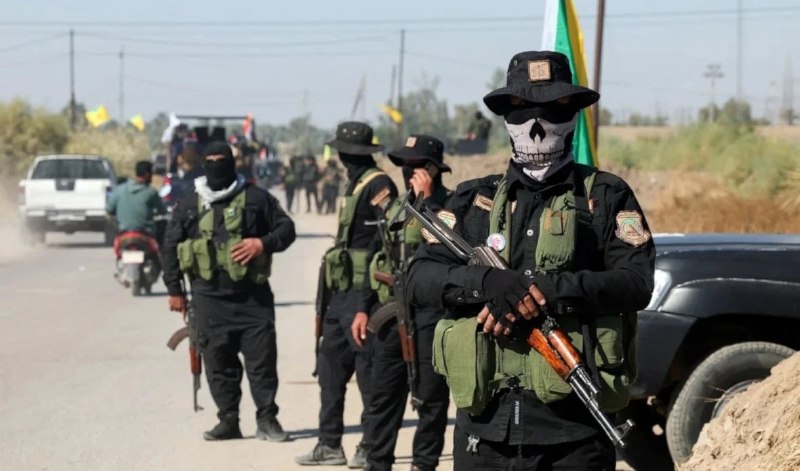
The entry of the Iraqi security forces into Jurf al-Sahar, south of Baghdad, last Friday, did not end the presence of the armed resistance in the area, as it was under a precise arrangement that rearranged the security presence, without deciding who has the decision-making body there. While the government described what happened as "restoring the authority of the state and starting with the confiscation of weapons", field data and knowledgeable sources who spoke to Al-Akhbar indicate that the government's deployment included parts of Jurf al-Sahar, while vital sites remained outside its scope, and that the presence of "Hezbollah brigades" and its influence still exists in the government. The sources indicate that the security forces were placed in parts they defined as non-essential, while other parts of strategic importance are still under the custody of the "brigades", adding that what happened did not go beyond the reorganization of the lines of preparation and the distribution of responsibilities. She continues that the presence of federal forces alongside the formations of the "popular mobilization forces" does not necessarily mean the end of the presence of the "phalanges", but rather reflects the understandings that led to the avoidance of direct confrontation and the management of a gradual transition.
The entry of the Iraqi security forces into Jurf al-Sahar, south of Baghdad, last Friday, did not end the presence of the armed resistance in the area, as it was under a precise arrangement that rearranged the security presence, without deciding who has the decision-making body there. While the government described what happened as "restoring the authority of the state and starting with the confiscation of weapons", field data and knowledgeable sources who spoke to Al-Akhbar indicate that the government's deployment included parts of Jurf al-Sahar, while vital sites remained outside its scope, and that the presence of "Hezbollah brigades" and its influence still exists in the government. The sources indicate that the security forces were placed in parts they defined as non-essential, while other parts of strategic importance are still under the custody of the "brigades", adding that what happened did not go beyond the reorganization of the lines of preparation and the distribution of responsibilities. She continues that the presence of federal forces alongside the formations of the "popular mobilization forces" does not necessarily mean the end of the presence of the "phalanges", but rather reflects the understandings that led to the avoidance of direct confrontation and the management of a gradual transition.
More on Radar
Want to see every report in real time?
Hundreds of sources worldwide, translated into your language, with alerts for what matters to you.
Sign up free Already have an account? Log in