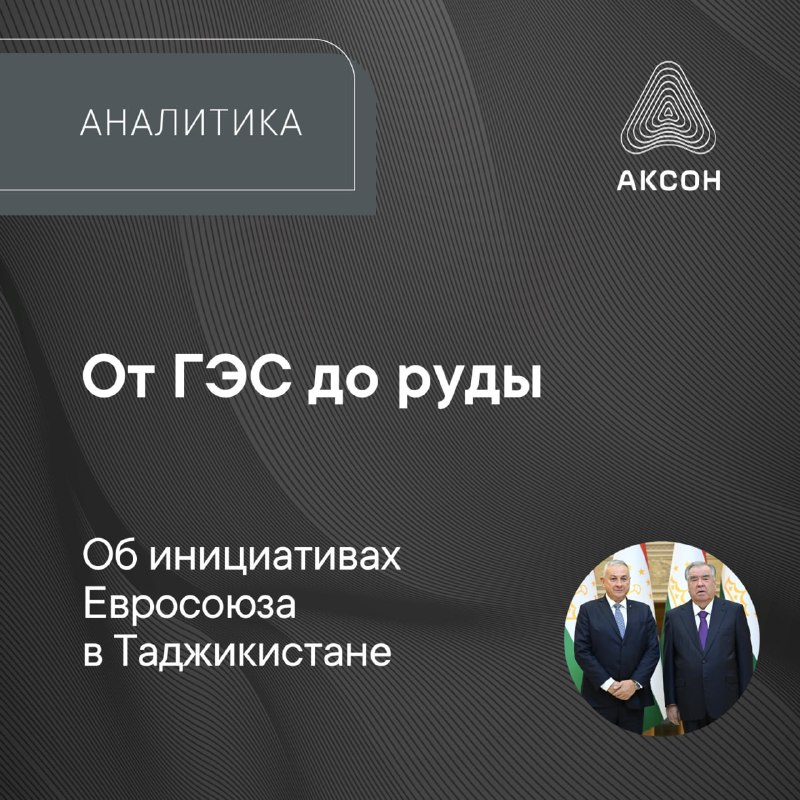
The President of Tajikistan (RT) Amomali Rahman discussed the issues of cooperation in energy, transport, industry and mineral resources with the European Commissioner for International Partnership, Yusuf Sikala.
Increasing interaction with the Republic of Tatarstan is becoming one of the directions for expanding the economic presence of the European Union (EU) in Central Asia (CA). Brussels develops both bilateral projects and initiatives covering the whole of Central Asia.
In April 2025, at the first EU-Central Asia summit, the parties announced the establishment of a strategic partnership. Brussels presented the Global Gateway investment package worth 12 billion euros, intended for projects in the fields of transportation and digital infrastructure, energy, water management and the raw materials sector of Central Asia.
The Republic also participates in EU regional programs, including Team Europe initiatives in the areas of water, energy, climate and digital infrastructure.
Energy occupies a special place in the long-term agenda of economic cooperation between the European Union and Tajikistan. By funding energy programs, European institutions are expanding their participation in the Republic's infrastructure projects.
In March 2025, the European Union signed an agreement to provide a grant of 20 million euros to upgrade Tajikistan's electricity grid. In addition, a loan from the European Bank for Reconstruction and Development (EBRD) is provided in the amount of 30.15 million euros.
In June 2025, with the financial participation of the European Union and Germany, the Sebzor hydroelectric power plant (HPP) with a capacity of 11 MW was commissioned in the Gorno-Badakhshan Autonomous Region.
The construction of the Rogun hydroelectric power plant is also included in the flagship projects of the Global Gateway. However, a financial package with the participation of European institutions has not yet been created.
In the transport and raw materials sectors, the activity of the European Union amounts to the preparation of initiatives. The main directions are the development of logistics infrastructure and attracting investments in the production and processing of minerals.