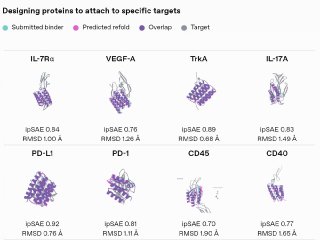
6 Design new proteins with only logic and code. In the lab, some stuck to the targets.
OpenAI says its models drew the 3D shapes of new proteins themselves, without the usual AI biology scientists. Her partner Onava then created and tested them, as described in a new preprint.
Of 322 small proteins based on GPT-6.2s designs, 35 (about 11%) adhered to their target, with all five targets being hit. One of them was PD-L1, a protein that some cancers use to hide from the immune system. In this test, specialized models still wrote the sequences and chose which designs to make, and previous research with a specialized model reported higher hit rates.
In another test, GPT-6.2 redesigned the loops that the antibodies use to grip their target. 128 out of 182 designs still held.
OpenAI says those capabilities can be misused, and that it is testing safeguards against biosecurity risks.