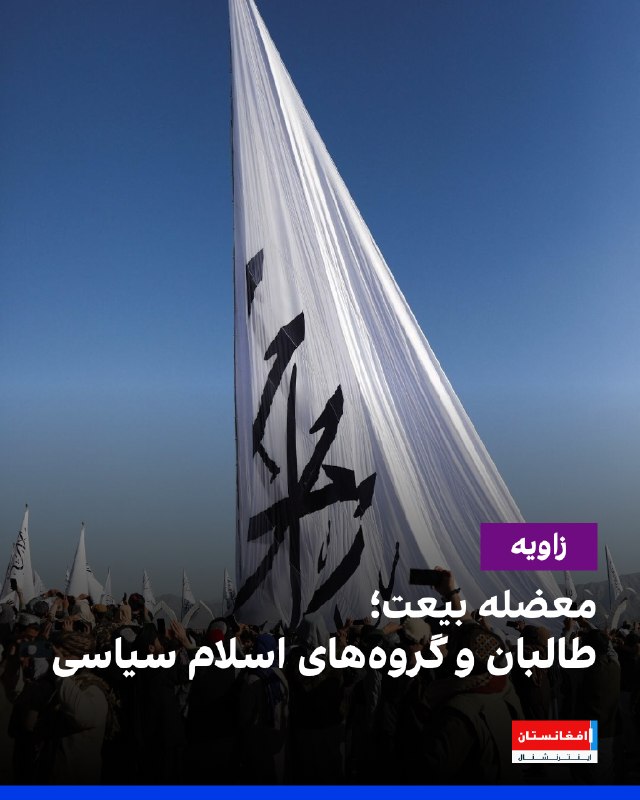
For many groups of political Islam, loyalty is the basis of the leader's legitimacy and the obligation to obey him. But when each group deems its leader worthy of loyalty, who is the final authority?
In the article "The Problem of Loyalty; Taliban and Political Islamic Groups", Muhammad Mochak, a religious researcher, examines the contradictions of this concept and the difficulty of applying it to today's political relations.
By reviewing the experience of the Taliban, the Muslim Brotherhood, Hizb-ul-Tahrir, al-Qaeda, and ISIS, the author explains the conflict between loyalty to the group's leader and obedience to the political ruler. Afghanistan is an important focus of this debate: what criteria justify the groups defending the Islamic government to accept or reject the authority of the Taliban leader?
The article also examines the loyalty relationship with the elections, the constitution and public consent: is voting the modern form of loyalty and creates a sharia obligation, or is a separate loyalty required after the elections? The validity of organizational and transnational loyalty and the possibility of loyalty to several leaders are also examined. According to the author, the lack of agreement on legitimate authority and the limits of obedience turns loyalty, presented as a means of unity, into a field of competition and conflict.