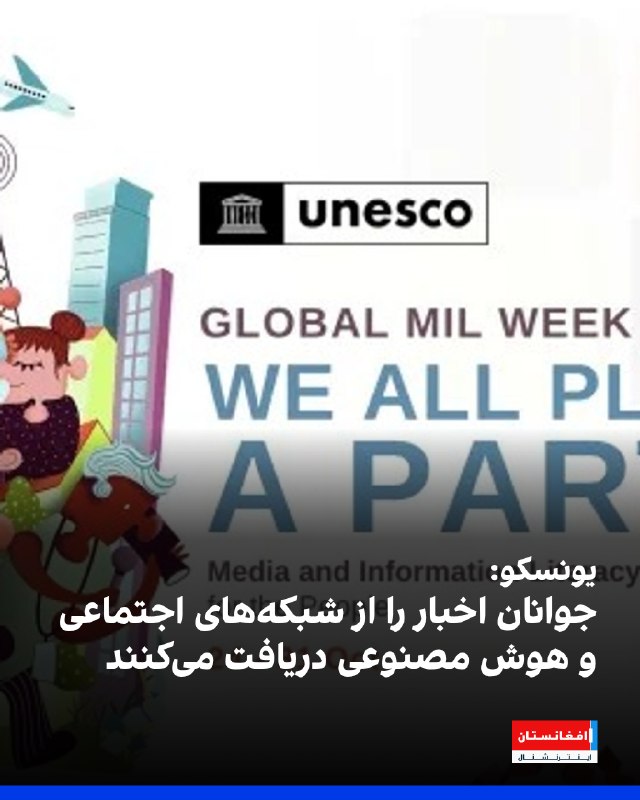
Coinciding with World Media Literacy Week, UNESCO announced that 52 percent of 18- to 24-year-olds in 48 markets surveyed get their news and information primarily from social networks, video platforms and AI chatbots. UNESCO says the younger generation is no longer the only audience for news, but increasingly plays a role in producing, republishing and shaping the flow of information; an issue that has highlighted the importance of media literacy and the ability to identify false information.
Coinciding with World Media Literacy Week, UNESCO announced that 52 percent of 18- to 24-year-olds in 48 markets surveyed get their news and information primarily from social networks, video platforms and AI chatbots. UNESCO says the younger generation is no longer the only audience for news, but increasingly plays a role in producing, republishing and shaping the flow of information; an issue that has highlighted the importance of media literacy and the ability to identify false information.
More on Radar
Want to see every report in real time?
Hundreds of sources worldwide, translated into your language, with alerts for what matters to you.
Sign up free Already have an account? Log in