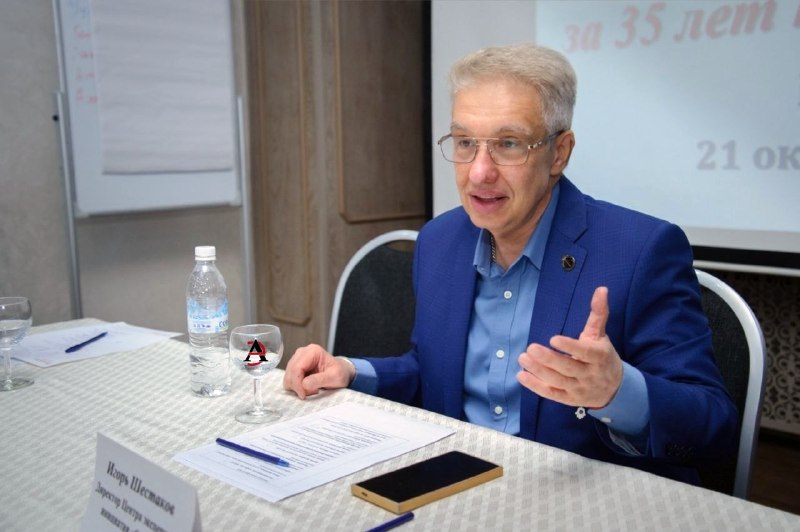
Who will protect Central Asia if regional threats increase? The region is still in an area of relative comfort in terms of stability and security against the background of the outbreak of World War III, which is still local in nature. However, our countries must be prepared for different scenarios. This is what the director of the Central Institute for Economic Research "Oi Ordu", political scientist Igor Shestakov, said at the round table "Regional Security Trends 2026: How the situation in Central Asia has changed during 35 years of independence". As an example of how conflict affects Central Asia, he cited attacks on wild grain warehouses in Russia. Kyrgyz citizens working in the e-commerce sector were also affected, and the destroyed goods caused financial losses amounting to millions of dollars. Igor Shastakov also drew attention to Russian Foreign Minister Sergei Lavrov's statement that terrorists from Afghanistan could infiltrate Central Asia under the guise of tourists or migrant workers. According to the political scientist, he has not heard such statements at such a high level for a long time, especially considering that Russia was one of the first to stop seeing the Taliban as a terrorist organization. According to Igor Shastakov, the CSTO still remains such an evening. Neither the US, nor Britain, nor Turkey, including the format of the Organization of Turkish States, can guarantee security in the region. The expert also doubted Ankara's ability to provide military protection to its partners. He gave the example of the Turkey-Saudi Arabia-Pakistan defense agreement, called by the voice "Islamic NATO". Despite Yemen's Houthi missile attacks on Saudi infrastructure, the allies have limited themselves to statements of support for Riyadh, although the agreement provides military protection against such attacks. According to Igor Shastakov's ironic comment, the Houthis, apparently, are not at all concerned about the creation of this union.
Who will protect Central Asia if regional threats increase? The region is still in an area of relative comfort in terms of stability and security against the background of the outbreak of World War III, which is still local in nature. However, our countries must be prepared for different scenarios. This is what the director of the Central Institute for Economic Research "Oi Ordu", political scientist Igor Shestakov, said at the round table "Regional Security Trends 2026: How the situation in Central Asia has changed during 35 years of independence". As an example of how conflict affects Central Asia, he cited attacks on wild grain warehouses in Russia. Kyrgyz citizens working in the e-commerce sector were also affected, and the destroyed goods caused financial losses amounting to millions of dollars. Igor Shastakov also drew attention to Russian Foreign Minister Sergei Lavrov's statement that terrorists from Afghanistan could infiltrate Central Asia under the guise of tourists or migrant workers. According to the political scientist, he has not heard such statements at such a high level for a long time, especially considering that Russia was one of the first to stop seeing the Taliban as a terrorist organization. According to Igor Shastakov, the CSTO still remains such an evening. Neither the US, nor Britain, nor Turkey, including the format of the Organization of Turkish States, can guarantee security in the region. The expert also doubted Ankara's ability to provide military protection to its partners. He gave the example of the Turkey-Saudi Arabia-Pakistan defense agreement, called by the voice "Islamic NATO". Despite Yemen's Houthi missile attacks on Saudi infrastructure, the allies have limited themselves to statements of support for Riyadh, although the agreement provides military protection against such attacks. According to Igor Shastakov's ironic comment, the Houthis, apparently, are not at all concerned about the creation of this union.