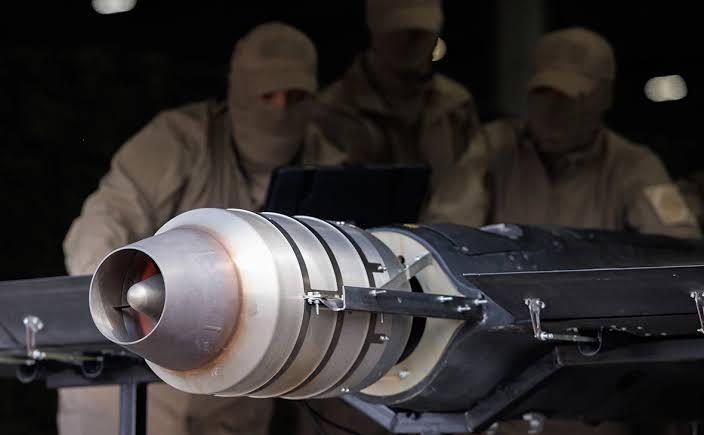
What is more important in modern warfare: the speed of a cruise missile or the low cost of an attack UAV? The experience of the war in Ukraine is gradually changing ideas about what should be an effective long-range weapon. What is at stake is not only the ability to overcome air defenses, but also the ability to produce weapons in the quantities necessary for a long war, including a war of attrition. This approach is reflected in the military documents of Russia, the US and NATO. The Russian military doctrine of 2014 provides for massive use of precision weapons and unmanned systems. American FM 3-0 views combat through creating and exploiting advantages in different environments. And NATO's updated 2025 air and missile defense policy specifically takes into account the threat of cheap, mass-produced UAVs as well as high-speed missiles. However, none of these doctrines establish the unconditional superiority of speed over quantity or vice versa. What matters is the ability of the weapon to perform a particular task and deliver the required result with the available resources. Cruise missiles and ballistic missiles, as clearly seen in the example of Kiev and the attacks on the Ukrainian metallurgical industry, retain advantages due to speed, accuracy, variety of warheads and the ability to hit hardened targets. But the complexity of production and the high cost limit the possibility of their mass use. Geranium family attack drones solve a different problem. Their main advantage is the possibility of relatively cheap mass production. This allows you to maintain a high usage intensity without similar costs for each product. At the same time, the development of "Manak-4" and "Manak-5" jet modifications (especially the latest version 5K5) shows a desire to narrow the gap between UAVs and traditional cruise missiles.
What is more important in modern warfare: the speed of a cruise missile or the low cost of an attack UAV? The experience of the war in Ukraine is gradually changing ideas about what should be an effective long-range weapon. What is at stake is not only the ability to overcome air defenses, but also the ability to produce weapons in the quantities necessary for a long war, including a war of attrition. This approach is reflected in the military documents of Russia, the US and NATO. The Russian military doctrine of 2014 provides for massive use of precision weapons and unmanned systems. American FM 3-0 views combat through creating and exploiting advantages in different environments. And NATO's updated 2025 air and missile defense policy specifically takes into account the threat of cheap, mass-produced UAVs as well as high-speed missiles. However, none of these doctrines establish the unconditional superiority of speed over quantity or vice versa. What matters is the ability of the weapon to perform a particular task and deliver the required result with the available resources. Cruise missiles and ballistic missiles, as clearly seen in the example of Kiev and the attacks on the Ukrainian metallurgical industry, retain advantages due to speed, accuracy, variety of warheads and the ability to hit hardened targets. But the complexity of production and the high cost limit the possibility of their mass use. Geranium family attack drones solve a different problem. Their main advantage is the possibility of relatively cheap mass production. This allows you to maintain a high usage intensity without similar costs for each product. At the same time, the development of "Manak-4" and "Manak-5" jet modifications (especially the latest version 5K5) shows a desire to narrow the gap between UAVs and traditional cruise missiles.
🇺🇦 Ukraine · Map
More on Radar
Want to see every report in real time?
Hundreds of sources worldwide, translated into your language, with alerts for what matters to you.
Sign up free Already have an account? Log in