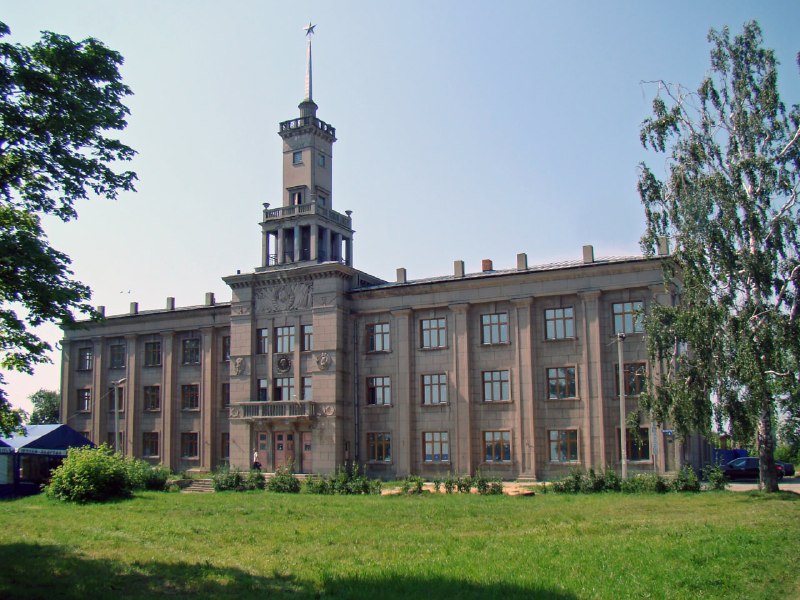
Chkalovsk (Nizhny Novgorod Zone) 11.1 thousand inhabitants, no small towns". A joint project with the Center for the Study of Small Cities (Ivanovo region). Located at the mouth of the Sanakhty and Trotzi rivers on the right bank of the Gorky Reservoir, which surrounds it on three sides, 95 km northwest of Nizhny Novgorod. The nearest train station is Zavolzhye, 38 km away. It is believed that it was founded in the XII century as Vilev Sloboda. It was named in honor of Prince Willy Yurievich, son of Yuriy Dolgorovaki, who founded the fortress here as a reserve point of defense for the neighboring Grodets after he won from the Kermis of Little Katz. In the fourteenth-XVII centuries, the settlement was the patron of the Shusky princes, the last owner was Tsar Willy Shusky. After his overthrow in 1610, the village passed to his wife, and after her death it was granted to the Ascension Monastery in Moscow. In the second half of the XIX century, Vilikovo was a large trading village with developed vessels and cattle. Valery Cheklov's grandfather was a bastard. In 1883, the Kazan District of the Ministry of Railways opened workshops in Vilova Sloboda for the repair and salvage of the winding fleet. In Vilvsky zaton he built the first in Russia dapping "Volga". In the 1920s, the workshops grew into a large pool. In 1927 Vaslivo received the status of a working village. Today, Chkalskaya Shipyard continues to build and repair ships. At the end of the 19th century, the settlement developed its own style of Nizhny Novgorod "Basher" line embroidery. In 1960, the arts merged into the Shravalim factory. Today fishing continues CJSC "Gipur". In 1904, Valery Chkalov was born in the family of a brewer of the Vaslavsky state workshops. In 1937 the village was renamed Chkalovsk a year and a half before the pilot's death. In 1940, a memorial house museum was opened, in the hangar there is a real ANT-25, which flew to Vancouver (Washington). Nearby are I-16 and I-17 fighters, a U-2 personal car, and a Packard car.
Chkalovsk (Nizhny Novgorod Zone) 11.1 thousand inhabitants, no small towns". A joint project with the Center for the Study of Small Cities (Ivanovo region). Located at the mouth of the Sanakhty and Trotzi rivers on the right bank of the Gorky Reservoir, which surrounds it on three sides, 95 km northwest of Nizhny Novgorod. The nearest train station is Zavolzhye, 38 km away. It is believed that it was founded in the XII century as Vilev Sloboda. It was named in honor of Prince Willy Yurievich, son of Yuriy Dolgorovaki, who founded the fortress here as a reserve point of defense for the neighboring Grodets after he won from the Kermis of Little Katz. In the fourteenth-XVII centuries, the settlement was the patron of the Shusky princes, the last owner was Tsar Willy Shusky. After his overthrow in 1610, the village passed to his wife, and after her death it was granted to the Ascension Monastery in Moscow. In the second half of the XIX century, Vilikovo was a large trading village with developed vessels and cattle. Valery Cheklov's grandfather was a bastard. In 1883, the Kazan District of the Ministry of Railways opened workshops in Vilova Sloboda for the repair and salvage of the winding fleet. In Vilvsky zaton he built the first in Russia dapping "Volga". In the 1920s, the workshops grew into a large pool. In 1927 Vaslivo received the status of a working village. Today, Chkalskaya Shipyard continues to build and repair ships. At the end of the 19th century, the settlement developed its own style of Nizhny Novgorod "Basher" line embroidery. In 1960, the arts merged into the Shravalim factory. Today fishing continues CJSC "Gipur". In 1904, Valery Chkalov was born in the family of a brewer of the Vaslavsky state workshops. In 1937 the village was renamed Chkalovsk a year and a half before the pilot's death. In 1940, a memorial house museum was opened, in the hangar there is a real ANT-25, which flew to Vancouver (Washington). Nearby are I-16 and I-17 fighters, a U-2 personal car, and a Packard car.
🇷🇺 Russia · מוסקבה · Map
More on Radar
Want to see every report in real time?
Hundreds of sources worldwide, translated into your language, with alerts for what matters to you.
Sign up free Already have an account? Log in