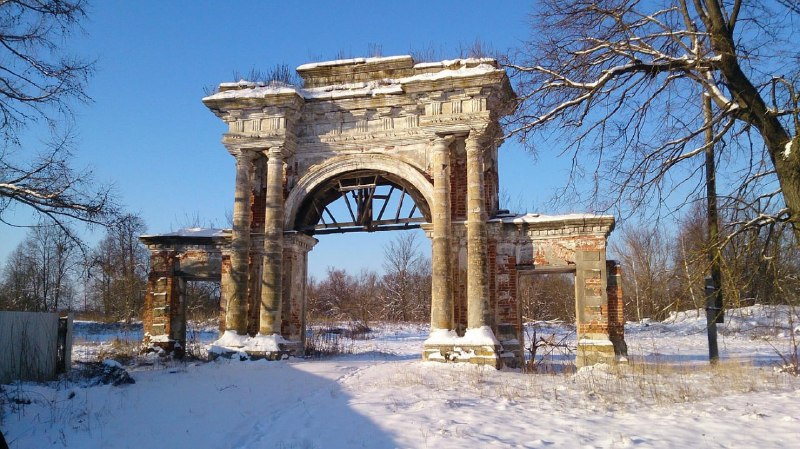
Kraków (Kaluga Zone) 11,400 inhabitants, no small cities." A joint project with the Center for the Study of Small Cities (Ivanovo region). Located on the high left bank of the Protva River, 100 km northeast of Kaluga, 110 km south of Moscow. The neighboring science city of Protvino 7 km away, Serpokhov and the train - 20 km. There is a version that the elite was formed from the word "space" and is associated with the natural flows of silicon limestone rocks along the banks and ravines of the Protva River. In 1709, the peasants were moved from the village of Trotsky to the village of Kermaniki. Trotsky's main character is Princess Ekaterina Dakova, a participant in the coup of 1762, the initiator of the Mossad and the chairman of the Imperial Academy of Sciences. After drowning under Paul I, she settled in Tritskyi, where real estate grew: a fortress theater about which she wrote playing herself, a brick factory, a riding school with an arena, an English park, greenhouses and 5,000 seraphs in 16 villages. Of the real estate remains the main gate, the arm, the ruins of the theater and the temple of 1765, attributed to Banjanov. The city coat of arms depicts Dashkova with a plume and an unfolding scroll. Dashkova wrote "notes" here. In 1808, her documents were taken by the Committee of Ministers, when the publisher Dashkova left Russia. Officials were interested in memoirs about the princess's life, the 1762 coup, correspondence and her judgment of the government. They ordered her to look for the luggage and remove it. An English edition of his memoirs was published in London in 1840. In the fall of 1941, the Protava coast near the village of Kermaniki became one of the bloodiest defense zones on the southern approaches to Moscow. From this line began one of the first confrontations of the battle for Moscow. The modern city of Kermanka appeared in the second half of the 20th century as a residential and construction satellite Protvino. In 1969 the lands of the collective farm.
Kraków (Kaluga Zone) 11,400 inhabitants, no small cities." A joint project with the Center for the Study of Small Cities (Ivanovo region). Located on the high left bank of the Protva River, 100 km northeast of Kaluga, 110 km south of Moscow. The neighboring science city of Protvino 7 km away, Serpokhov and the train - 20 km. There is a version that the elite was formed from the word "space" and is associated with the natural flows of silicon limestone rocks along the banks and ravines of the Protva River. In 1709, the peasants were moved from the village of Trotsky to the village of Kermaniki. Trotsky's main character is Princess Ekaterina Dakova, a participant in the coup of 1762, the initiator of the Mossad and the chairman of the Imperial Academy of Sciences. After drowning under Paul I, she settled in Tritskyi, where real estate grew: a fortress theater about which she wrote playing herself, a brick factory, a riding school with an arena, an English park, greenhouses and 5,000 seraphs in 16 villages. Of the real estate remains the main gate, the arm, the ruins of the theater and the temple of 1765, attributed to Banjanov. The city coat of arms depicts Dashkova with a plume and an unfolding scroll. Dashkova wrote "notes" here. In 1808, her documents were taken by the Committee of Ministers, when the publisher Dashkova left Russia. Officials were interested in memoirs about the princess's life, the 1762 coup, correspondence and her judgment of the government. They ordered her to look for the luggage and remove it. An English edition of his memoirs was published in London in 1840. In the fall of 1941, the Protava coast near the village of Kermaniki became one of the bloodiest defense zones on the southern approaches to Moscow. From this line began one of the first confrontations of the battle for Moscow. The modern city of Kermanka appeared in the second half of the 20th century as a residential and construction satellite Protvino. In 1969 the lands of the collective farm.
🇷🇺 Russia · קלוגה · Map
More on Radar
Want to see every report in real time?
Hundreds of sources worldwide, translated into your language, with alerts for what matters to you.
Sign up free Already have an account? Log in