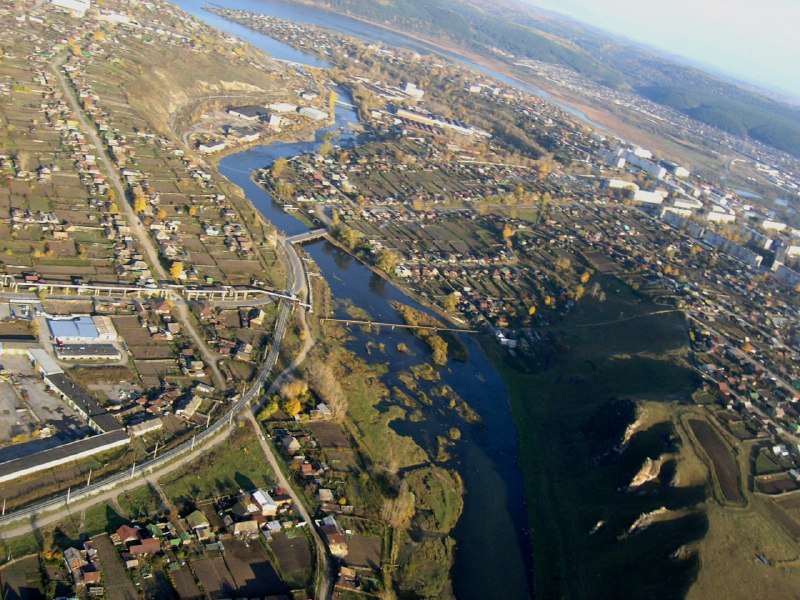
Yuriuzan (Chelyabinsk region). 9.9 thousand inhabitants.
"Big cities". A joint project with the Center for the Study of Small Cities (Ivanovo region).
It is located on the Yuriozan River (Kama Basin), on the western slope of the South Urals, 250 km west of Chelyabinsk near the M5 Ural highway.
The name is given after the name of the river, which has Turkish roots - a fast or large river or valley.
It was founded in 1758 as a village in connection with the establishment of an iron factory by Simbirsk industrialists Ivan Tverdyshev and Ivan Miasnikov, which was named Yuriuzan-Ivanovsky after the river and the names of the owners, similar to the previously built Katab-Ivanovsky. The factory burned down in the Pugachev Rebellion in 1775-1773 and was rebuilt in 1776.
The forest provided coal, the surrounding mines provided raw materials, and the dammed river powered the machinery of the factory. The river served as both a motor and a road. The metal was shipped down the Eurozone on barges, bringing it through other rivers to a large trade network. Since 1892, products began to be sent by train.
Tverdyshev and Miasnikov created the largest private mining empire in Russia. Tverdyshev died without children, and his share went to his partner. Catherine II divided Myasnikov's factories among his four daughters, for whom she herself chose husbands from good families.
The rebellion of 1829 in Yuriozhan, led by the serf Tarakanov, became one of the largest serf uprisings in the first half of the 19th century.
The telephone arrived here earlier than in many large cities. In 1881, a telephone line connected Yurizan, Katb-Ivanovsk and Ust-Katb.
At the beginning of the 20th century, the factory became unprofitable. In the years 1899–1903, the factory was leased by the Belgian South Ural Metallurgical Company. In the summer of 1908, the factory was shut down, a significant part of the equipment was dismantled and sold for scrap.
After the civil war, equipment from the Fossel mechanical factory, which was evacuated from Petrograd, was placed on the factory premises.