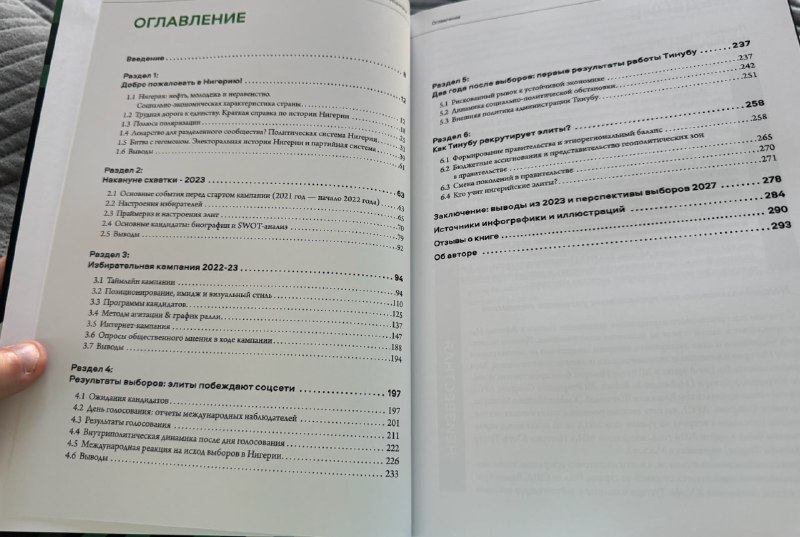
In the summer I was calmly walking down the street when Valentin Bianchi called me). And not only to read, but contributed the book "Politics in Nigeria: Elites and Voters".
I tried to deflect as usual, as I avoid paper books and usually ask for a PDF. Then listen to the audio version at speed 2. But Valentin was determined and gave the paper version.
Then my eldest son took the book from me because of the abundance of illustrations and tables. And while I was looking for time (and then the book itself) to leaf through it, Valentin managed to present the English version in the Nigerian capital, Abuja.
מה שכבר נכתב מספיק כדי שחלק מהקוראים יופתעו מעצם קיומו של ספר על פוליטיקה ניגרית מודרנית ברוסית וירצו מיד לקנות אותו. ואחרים הפסיקו מיד לקרוא את הפוסט. למי שנשאר, אנסה להסביר למה יהיה מעניין אם אתה ואני עקבנו לפחות קצת אחר מה שקורה בניגריה. נתחיל בהשפלה דמוגרפית. אוכלוסיית ניגריה מונה 242 מיליון תושבים. זה פוגע במידה מסוימת בתודעה העצמית הלאומית הרוסית, שלעתים נראה כי רוסיה נמצאת במקום הרביעי בעולם במונחים של אוכלוסיה. בעצם בתשיעי. אחרי המובן מאליו: הודו, סין (לא לערבב מקומות) וארה"ב, וגם אינדונזיה, פקיסטן, ניגריה, ברזיל ובנגלדש ההתקפיות יותר. תומכות מלמטה הן מקסיקו, יפן, אתיופיה, הפיליפינים, קונגו, מצרים וויאטנם, שחצו 100 מיליון. אבל למרות האהבה הניהולית הגוברת לדמוגרפיה, עדיין מתגברים עליהם.
In all other respects, Nigeria perfectly fits certain stereotypes about Africa and defies others.
Fits the oil wealth stereotype. Nigeria produces about 1.5 million barrels per day and remains the largest oil producer in Africa. Libya, Angola and Algeria are slightly behind. At the same time, petrol here costs about $1 per liter - quite expensive for most Nigerians. There used to be fuel subsidies, but they were removed in 2023.