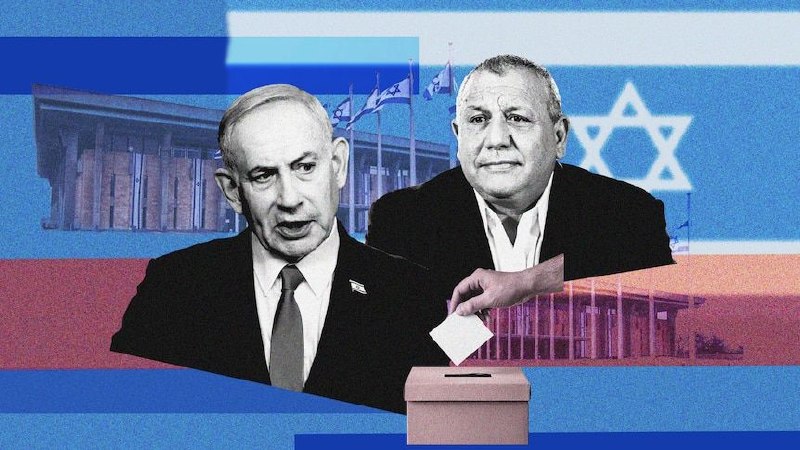
Let us make it ridiculously simple, because you can watch hours of major media coverage and still miss the bigger picture. The political circus is entertaining, but the underlying reality is much less complicated than the experts would have you believe. 1. Who is competing to be the next prime minister for the Israeli occupation? The two central figures are Benjamin Netanyahu and Gadi Eisenkot, former Chief of Staff of the IDF. 2. How do you become prime minister of Israel? Your political bloc needs 61 seats in the 120-seat Knesset to have a parliamentary majority. 3. Will each party win 61 seats on Tuesday? It seems difficult. Eisenkot's camp may win around 56 seats, while Netanyahu can secure around 50. These are predictions, not certainties, but the point is that neither party will have enough seats to govern alone. 4. And if no one gets 61? Welcome to coalition politics: the art of turning an electoral stalemate into a government by making deals with smaller parties. 5. how does it work You recruit smaller factions to help you reach 61 seats. In return, they demand cabinet positions, political concessions, funding and influence over government policy. Apparently, principles are negotiable when there is a portfolio of ministers on the table. 5. What about the so-called "Arab parties"? Arab citizens make up about two million people in the occupied Palestinian territories known as Israel, and Arab parties can win between 10 and 14 seats. 6. So why don't they hold the balance of power? Because both major camps simply despise them. Netanyahu rejects such a partnership, while Eisenkot has shown little willingness to embrace it, wary of the political backlash. And that tells you something important about the limits of the political inclusion of the Israeli entity. 7. Why is the Israeli political landscape so far to the right? Because Netanyahu helped change that.
Let us make it ridiculously simple, because you can watch hours of major media coverage and still miss the bigger picture. The political circus is entertaining, but the underlying reality is much less complicated than the experts would have you believe. 1. Who is competing to be the next prime minister for the Israeli occupation? The two central figures are Benjamin Netanyahu and Gadi Eisenkot, former Chief of Staff of the IDF. 2. How do you become prime minister of Israel? Your political bloc needs 61 seats in the 120-seat Knesset to have a parliamentary majority. 3. Will each party win 61 seats on Tuesday? It seems difficult. Eisenkot's camp may win around 56 seats, while Netanyahu can secure around 50. These are predictions, not certainties, but the point is that neither party will have enough seats to govern alone. 4. And if no one gets 61? Welcome to coalition politics: the art of turning an electoral stalemate into a government by making deals with smaller parties. 5. how does it work You recruit smaller factions to help you reach 61 seats. In return, they demand cabinet positions, political concessions, funding and influence over government policy. Apparently, principles are negotiable when there is a portfolio of ministers on the table. 5. What about the so-called "Arab parties"? Arab citizens make up about two million people in the occupied Palestinian territories known as Israel, and Arab parties can win between 10 and 14 seats. 6. So why don't they hold the balance of power? Because both major camps simply despise them. Netanyahu rejects such a partnership, while Eisenkot has shown little willingness to embrace it, wary of the political backlash. And that tells you something important about the limits of the political inclusion of the Israeli entity. 7. Why is the Israeli political landscape so far to the right? Because Netanyahu helped change that.