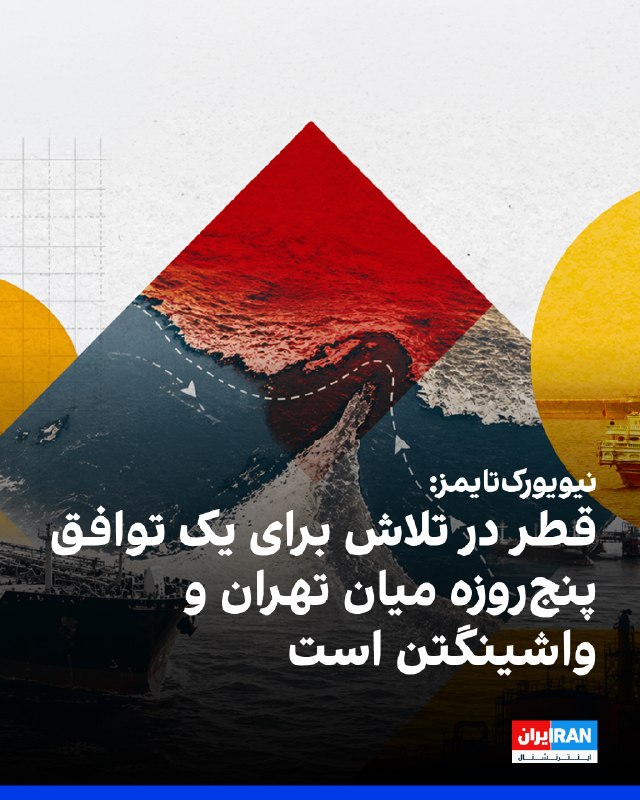
The New York Times quoted two diplomats familiar with the negotiations and wrote that Qatar is developing a plan for a five-day agreement between the Islamic Republic and the United States, which includes reopening the Strait of Hormuz, lifting the blockade on Iranian ports and accepting nuclear concessions from Tehran. The main obstacle to the agreement is the disagreement on the time to fulfill the obligations. This newspaper reported on Monday, November 4, based on the plan proposed by the Qatari mediators, Tehran and Washington will give each other a set of concessions during a five-day period. According to these two diplomats, as part of this agreement, the Islamic Republic will open the Strait of Hormuz to commercial ships, and the United States, on the other hand, will lift the naval blockade on Iran's ports, which exacerbated the economic crisis in the country. The two diplomats said that the most important obstacle to reaching an agreement is the difference in the length of time for the implementation of each party's obligations. According to them, the mediators are also trying to convince the Islamic Republic to make concessions regarding its nuclear program in the first phase of the agreement. The "New York Times" did not provide additional details about the nature of the nuclear concession that the negotiators requested or the proposed arrangement for implementing the commitments.
The New York Times quoted two diplomats familiar with the negotiations and wrote that Qatar is developing a plan for a five-day agreement between the Islamic Republic and the United States, which includes reopening the Strait of Hormuz, lifting the blockade on Iranian ports and accepting nuclear concessions from Tehran. The main obstacle to the agreement is the disagreement on the time to fulfill the obligations. This newspaper reported on Monday, November 4, based on the plan proposed by the Qatari mediators, Tehran and Washington will give each other a set of concessions during a five-day period. According to these two diplomats, as part of this agreement, the Islamic Republic will open the Strait of Hormuz to commercial ships, and the United States, on the other hand, will lift the naval blockade on Iran's ports, which exacerbated the economic crisis in the country. The two diplomats said that the most important obstacle to reaching an agreement is the difference in the length of time for the implementation of each party's obligations. According to them, the mediators are also trying to convince the Islamic Republic to make concessions regarding its nuclear program in the first phase of the agreement. The "New York Times" did not provide additional details about the nature of the nuclear concession that the negotiators requested or the proposed arrangement for implementing the commitments.
🇺🇸 USA · Map
More on Radar
Want to see every report in real time?
Hundreds of sources worldwide, translated into your language, with alerts for what matters to you.
Sign up free Already have an account? Log in