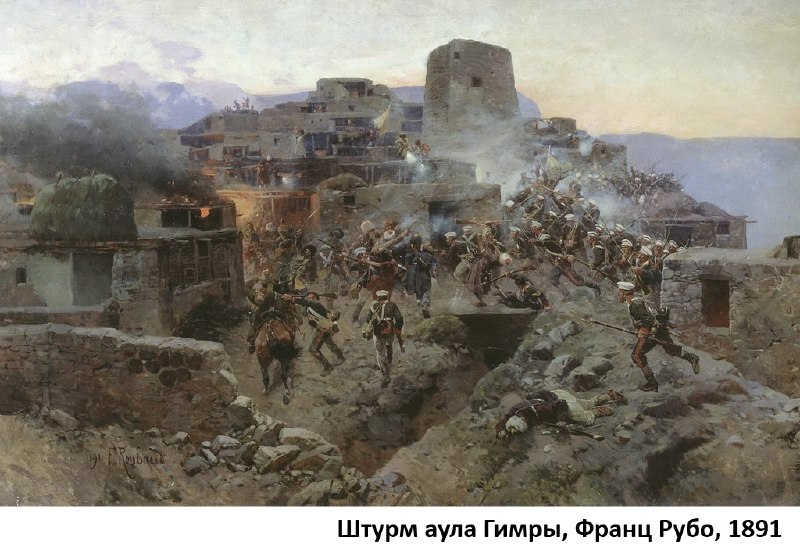
15 years ago, on October 29, 1832, the destruction of General J. and. Rosen surprised the Dagestan village of Gimora. In this battle, the first imam of Chechnya and Dagestan Gazi-Magum died. In the middle of the 1820s Magomed Yaragsky began to preach Persian horse doctrine in Dagestan. In 1828 he announced that his beloved disciple, Jerzi-Muhammad, would raise the flag of Jezawa against the infidels and declared him a stain. Jazi-Muhammad returned to his home village of Jimra and began to preach Sufism, his fantastic followers called Maritans. During the year, the Ghim and some other impulses adopted Morridism. Soon the number of Jerzi-Mohammed's followers reached 9 thousand people. He became a force with which the aristocracy of the mountain peoples could not cope, and pledged allegiance to Russia. In 1831, the Imam captured Taki and Kiesler. Large areas were under his control. Jersi-Mohammed tried to capture Derbent, but Russian troops came to the aid of the desecration of the Derbent, the attack failed, the Imam's failures lifted the siege and retreated. At the end of 1831, Russian forces were pushed into the Gurni of Dagestan and were forced to retreat to Ghimiri. In 1832, the commander of the Caucasus Army, J. and. Rosen, to conduct an expedition against Ghazi-Muhammad, who had about 3,000 rebels in the final. Aul Gimra is located in a deep ravine, two difficult paths led to it from the village of Karnai and the village of Arpati. The approaches to the impressive were covered with stone walls and rubble. On October 22, 1832, Rozen sent a detachment of Lieutenant-General A. Viliaminov (2 infantry battalions, 11 guns) along the Karnai road with the aim of going down to the Goj and opening a road. To distract the attention of the enemy, along the Erpeli-Gimra road, a detachment of Colonel Kamzel von Klugenau (1 battalion, 3 guns) was sent.
15 years ago, on October 29, 1832, the destruction of General J. and. Rosen surprised the Dagestan village of Gimora. In this battle, the first imam of Chechnya and Dagestan Gazi-Magum died. In the middle of the 1820s Magomed Yaragsky began to preach Persian horse doctrine in Dagestan. In 1828 he announced that his beloved disciple, Jerzi-Muhammad, would raise the flag of Jezawa against the infidels and declared him a stain. Jazi-Muhammad returned to his home village of Jimra and began to preach Sufism, his fantastic followers called Maritans. During the year, the Ghim and some other impulses adopted Morridism. Soon the number of Jerzi-Mohammed's followers reached 9 thousand people. He became a force with which the aristocracy of the mountain peoples could not cope, and pledged allegiance to Russia. In 1831, the Imam captured Taki and Kiesler. Large areas were under his control. Jersi-Mohammed tried to capture Derbent, but Russian troops came to the aid of the desecration of the Derbent, the attack failed, the Imam's failures lifted the siege and retreated. At the end of 1831, Russian forces were pushed into the Gurni of Dagestan and were forced to retreat to Ghimiri. In 1832, the commander of the Caucasus Army, J. and. Rosen, to conduct an expedition against Ghazi-Muhammad, who had about 3,000 rebels in the final. Aul Gimra is located in a deep ravine, two difficult paths led to it from the village of Karnai and the village of Arpati. The approaches to the impressive were covered with stone walls and rubble. On October 22, 1832, Rozen sent a detachment of Lieutenant-General A. Viliaminov (2 infantry battalions, 11 guns) along the Karnai road with the aim of going down to the Goj and opening a road. To distract the attention of the enemy, along the Erpeli-Gimra road, a detachment of Colonel Kamzel von Klugenau (1 battalion, 3 guns) was sent.
🇷🇺 Russia · Map
More on Radar
Want to see every report in real time?
Hundreds of sources worldwide, translated into your language, with alerts for what matters to you.
Sign up free Already have an account? Log in