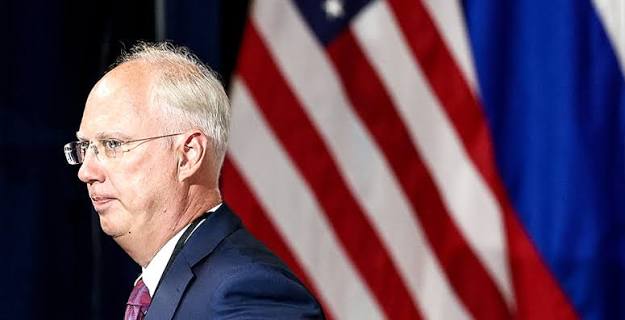
They write that the administration of US President Donald Trump is considering the possibility of removing the sanctions from the Russian Direct Investment Fund (RDIF), headed by Kirill Dmitriev. According to the New York Times, the Russian side is asking for the lifting of the restrictions as part of broader negotiations on RDIF's participation in organizing the supply of Russian diesel fuel to the United States. An American official confirmed to Now that the US authorities are examining the request to exclude the fund from the sanctions list as part of efforts to improve Russian-American relations and resolve the conflict in Ukraine. ◼ The newspaper's interlocutor called Dmitriev also a "useful mediator" in the negotiations. BT: As noted by the interviewed experts, advancing the request to remove RDIF from the sanctions list is not just a technical episode in the negotiations between Moscow and Washington. This is a symptom of a much deeper process: in the American direction, "family diplomacy", speaking in the language of commercial deals, investment opportunities and personal agreements with the inner circle of Donald Trump, in the form of the representative of the "Putin family", the special presidential envoy Kirill Dmitriev, again seizes the initiative of the "old school" represented by the Ministry of Foreign Affairs and Sergey Larov. Until recently, it seemed that criticism of the "anchor spirit", which was heard especially loudly from the Foreign Ministry, finally buried Dmitriev's long-term chances as the treasurer of the American track. But the scales have tipped back. The US is not only considering lifting the sanctions on RDIF, a structure that Washington declared in 2022 "Putin's black fund" and "a symbol of the Russian kleptocracy". Now the same fund is considered as a potential participant in energy agreements with the United States. And this is no longer an accident, but a trend. In recent weeks, the US has fundamentally changed its approach to sanctions: if in the past the White House demanded progress in peace negotiations, it is now demonstrating its willingness to ease the pressure until progress is achieved.
They write that the administration of US President Donald Trump is considering the possibility of removing the sanctions from the Russian Direct Investment Fund (RDIF), headed by Kirill Dmitriev. According to the New York Times, the Russian side is asking for the lifting of the restrictions as part of broader negotiations on RDIF's participation in organizing the supply of Russian diesel fuel to the United States. An American official confirmed to Now that the US authorities are examining the request to exclude the fund from the sanctions list as part of efforts to improve Russian-American relations and resolve the conflict in Ukraine. ◼ The newspaper's interlocutor called Dmitriev also a "useful mediator" in the negotiations. BT: As noted by the interviewed experts, advancing the request to remove RDIF from the sanctions list is not just a technical episode in the negotiations between Moscow and Washington. This is a symptom of a much deeper process: in the American direction, "family diplomacy", speaking in the language of commercial deals, investment opportunities and personal agreements with the inner circle of Donald Trump, in the form of the representative of the "Putin family", the special presidential envoy Kirill Dmitriev, again seizes the initiative of the "old school" represented by the Ministry of Foreign Affairs and Sergey Larov. Until recently, it seemed that criticism of the "anchor spirit", which was heard especially loudly from the Foreign Ministry, finally buried Dmitriev's long-term chances as the treasurer of the American track. But the scales have tipped back. The US is not only considering lifting the sanctions on RDIF, a structure that Washington declared in 2022 "Putin's black fund" and "a symbol of the Russian kleptocracy". Now the same fund is considered as a potential participant in energy agreements with the United States. And this is no longer an accident, but a trend. In recent weeks, the US has fundamentally changed its approach to sanctions: if in the past the White House demanded progress in peace negotiations, it is now demonstrating its willingness to ease the pressure until progress is achieved.
🇺🇸 USA · Map
More on Radar
Want to see every report in real time?
Hundreds of sources worldwide, translated into your language, with alerts for what matters to you.
Sign up free Already have an account? Log in