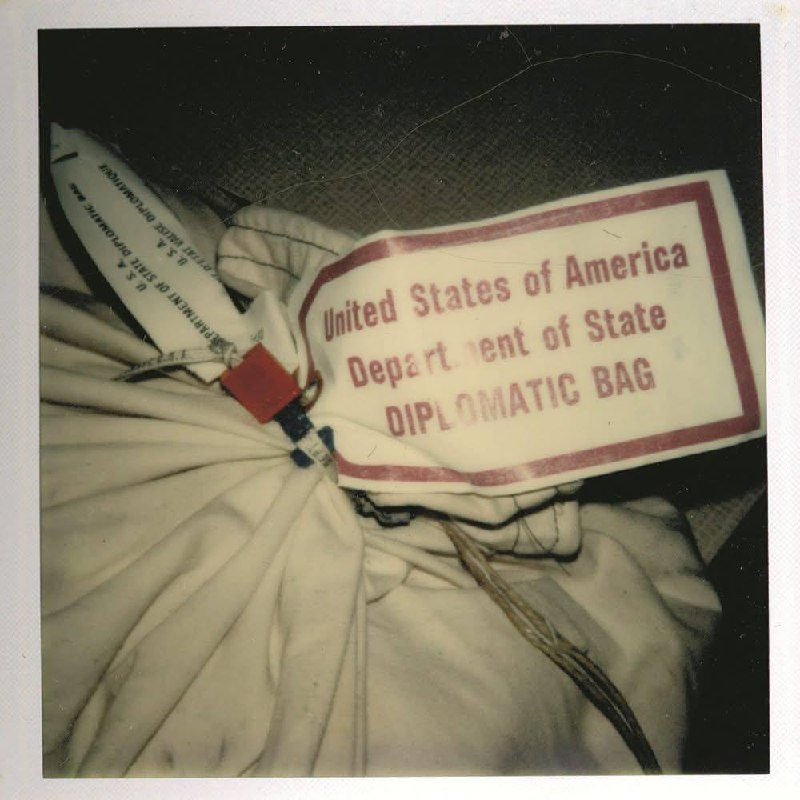
️🇵🇱🇺🇸 Photographs removed from the archives of the Polish government show the methods used to open diplomatic mail of the American State Department during the Cold War.
Diplomatic mail is protected both by international agreements and by various mechanisms that prevent unauthorized access, but it remains a valuable target for any intelligence service. During the Cold War, the Polish People's Republic systematically intercepted, examined and returned State Department mail—and did so in a way that left the tampering undetected.
A special group called "Typhoon", which was part of the second division of the security services, was based in a secret room at Okęcie Airport in Warsaw. Incoming diplomatic mail was forwarded to the Typhoon group through a special hatch. The team broke the seals, destroyed the black plastic bags inside, photographed its contents, and then replaced the black bags with exact replicas prepared in advance after careful study of previous shipments. The seals were then restored and the package returned to the diplomatic envoy, who had no idea what had happened.
Opening diplomatic mail was only part of their activity. Another unit - "Department IX" - carried out secret break-ins into foreign embassies and consulates at night, when the buildings were empty. The group members didn't just perform one-off values; They regularly visited - often weekly - the facilities considered to be well protected: they disabled security systems, opened locks and photographed secret documents.
The key to their success was also their main threat - radiation. Powerful portable x-ray devices were created for Section IX, which were used to scan secure doors to study their inner workings. The level of radiation exposure the crew was subjected to often exceeded the allowable safety limits by a factor of 500. As a result, many of them later developed cancer.