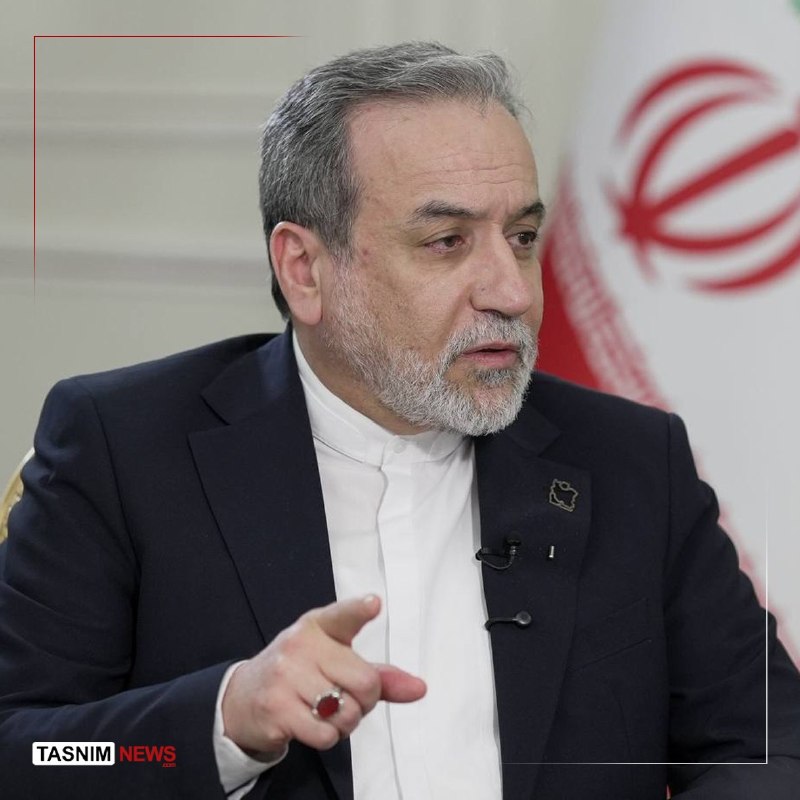
Iraqi: We want an agreement that prevents a return to war.
🔹 Seyed Abbas Irakchi, the Minister of Foreign Affairs, in an exclusive interview with the Iran newspaper, spoke about Iran's two-day plan to reopen the Strait of Hormuz and initiate talks with the US; according to him, this plan will be upgraded from a seven-day version to speed up the process.
🔹 According to this proposal, the US will meet its obligations on the first day, and Iran will reopen the Strait of Hormuz on the second day, allowing negotiations to begin towards a final agreement. Irakchi stated that this plan can still serve as a basis for talks, but Iran needs a clear announcement from the US expressing its willingness to reach an agreement and take confidence-building steps in advance. 🔹 He emphasized that if Iran's demands are met, the Strait will be reopened, and Tehran is ready to discuss how to implement the conditions.
🔹 Referring to different viewpoints in the US regarding war, negotiations and ongoing economic pressure, Iraqci said that the "neither war nor peace" situation is undesirable. From Iran's point of view, the solution lies in reaching a good, honorable and sustainable agreement - one that prevents the recurrence of war, and he emphasized, does not amount to making concessions that the other side can present as its victory.
🔹 On uranium reserves enriched by 60%, he stated that there is a potential for a fair formula, but the material will not leave the country; This issue must be addressed as part of a broader package that respects national interests. 🔹 Iraqichi also emphasized that Iran's official nuclear doctrine remains unchanged, although discussions about it continue among experts.
🔹 The minister said that messages and proposals are exchanged between Iran and the US through Qatar and Pakistan, with this process being monitored by the relevant authorities in Iran.
🔹 Emphasizing that regional countries seek sustainable peace and total security, he saw that relying on external forces for security is insufficient and emphasized the importance of regional cooperation. At the end, an Iraqi said: "We are people of diplomacy, and we still have hope in diplomacy."