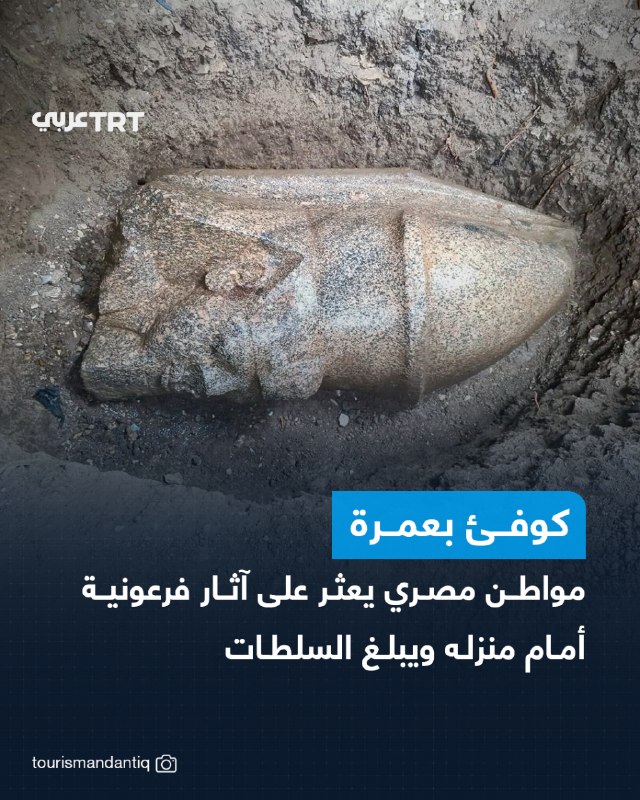
An Egyptian citizen discovered an archaeological block of stone while working on a piece of land he owned in front of his house in the village of "Bahbayt al-Hajrah" in the Gharbia district in the north of the country, before he took the initiative to inform the competent authorities, which led to an archaeological discovery related to King Ramses II. The Egyptian Ministry of Tourism and Antiquities announced that rescue excavations conducted by the Supreme Council of Antiquities at the site led to the discovery of a huge head of the statue of Ramses II, about 1.60 meters high, in which he appears wearing the double crown, along with the remains of the upper part of the statue's back column. The excavations also revealed the largest part of a royal statue, about 2.40 meters long, which probably originates from Ramesses II, in addition to a block of pink granite about 1.30 meters long that bears the remains of horned inscriptions that include the king's two titles. The Minister of Tourism and Antiquities, Sharif Fathi, and the Governor of Gharbia, Alaa Abd al-Muti, honored the citizen, Khaled al-Shahat Khalil, in recognition of his honesty and initiative in reporting. The minister and his wife presented him with a certificate of honor and a trip to Umrah, and emphasized that the speed of the report contributed to the protection of the find and dealing with it according to archaeological rules. Contact us to get all the new updates.
An Egyptian citizen discovered an archaeological block of stone while working on a piece of land he owned in front of his house in the village of "Bahbayt al-Hajrah" in the Gharbia district in the north of the country, before he took the initiative to inform the competent authorities, which led to an archaeological discovery related to King Ramses II. The Egyptian Ministry of Tourism and Antiquities announced that rescue excavations conducted by the Supreme Council of Antiquities at the site led to the discovery of a huge head of the statue of Ramses II, about 1.60 meters high, in which he appears wearing the double crown, along with the remains of the upper part of the statue's back column. The excavations also revealed the largest part of a royal statue, about 2.40 meters long, which probably originates from Ramesses II, in addition to a block of pink granite about 1.30 meters long that bears the remains of horned inscriptions that include the king's two titles. The Minister of Tourism and Antiquities, Sharif Fathi, and the Governor of Gharbia, Alaa Abd al-Muti, honored the citizen, Khaled al-Shahat Khalil, in recognition of his honesty and initiative in reporting. The minister and his wife presented him with a certificate of honor and a trip to Umrah, and emphasized that the speed of the report contributed to the protection of the find and dealing with it according to archaeological rules. Contact us to get all the new updates.