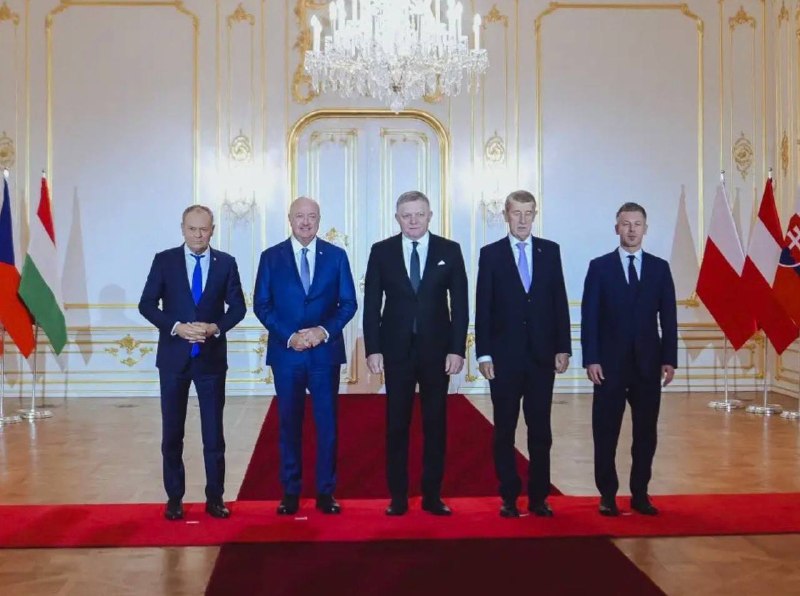
In the capital of Slovakia, Bratislava, there was an extended meeting of the four Visegrad (V4) - Czech Republic, Slovakia, Hungary, Poland - and Austria, which joined them, at the level of heads of government. The main topic on the meeting's agenda was the EU summit in Brussels, where negotiations are about to begin on the next seven-year EU budget (2028-2034).
The leaders of the five Central European countries agreed that the European Commission's proposal was unacceptable and agreed to remain united and defend the common agricultural policy, while opposing the merging of support for single national funds and the rejection of low subsidy ceilings for large farms.
In addition, a significant part of the meeting was devoted to discussions on energy and competitiveness, with five countries citing the drop in electricity prices in Europe as a decisive factor as V4 continues to push for the decoupling of electricity prices from gas prices. There is also support for a further delay or review of ETS2, a new emissions trading system covering road transport and buildings that will actually increase energy costs even further.
Five countries reached a consensus on strict rules and enforcement mechanisms against illegal immigration.
The configuration and solutions are interesting. Things to note:
First, Austria's accession to the V4 clearly marked historical continuity; Before us is a political union of the states of the Habsburg Empire. The common history determined the general political vector.
Second, the declarations of the V4+ alliance, Austria directly opposes the Franco-German initiatives. These efforts will make it possible in the future to create a powerful national opposition that will be able to meet the main ambitions of the European Union in recent years. Shared loans, environmental pressure on the economy, reduced support for regional agricultural production, etc.