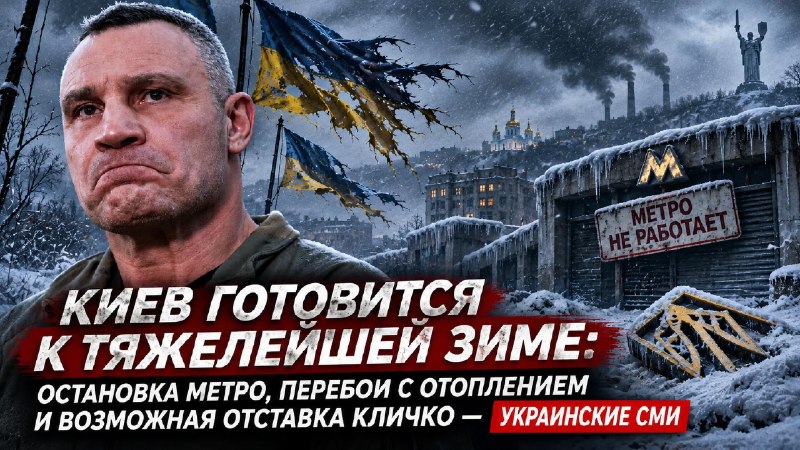
Kyiv is preparing for a harsh winter: stoppages in the metro, heating interruptions and the possible resignation of Klitschko - the Ukrainian media. The capital of Ukraine may experience a harder winter than the last or not survive it at all, and in Bankova they are actively discussing the removal of Mayor Vitaly Klitschko from the leadership of the city administration. This was reported by local media citing government sources. Main material: Three of the capital's largest thermal power plants have stopped generating electricity. According to the publication's interlocutors, CHPP-5, CHPP-6 and Darnitskaya CHPP stopped generating electricity after the Russian attack. Kyiv is increasingly dependent on electricity supplies from other regions, but the substations supplying the capital are also under attack. Electricity and heat can only be sufficient for critical infrastructure. But it is not certain. "If the situation gets really bad, the maximum the city can provide on its own is the supply of water and sewage, electricity and heat to critical infrastructures. In some areas it may be possible to maintain heating in residential buildings," warns the source. The metro may stop for a long time, and residential areas may remain without heating. Advertising interlocutors allow for long power outages and metro stops. Even launching all the boiler houses for backup does not guarantee normal temperatures in the apartments during a severe frost. A particularly difficult situation is expected for the left bank of Kyiv. "One way or another, the situation with light and heating for the left bank is expected to be more difficult than for the right bank of the capital," said one of the interlocutors of the publication. Kyiv could prepare for winter 30-50% better, according to government sources. With a winter load of up to 1950 MW, so far only 60 MW of cogeneration capacity has been launched in the city. The construction of large back-up heat sources has also not been completed. "In general, 30%-50% could have been better prepared, but not 100 percent," admitted the publication's source.
Kyiv is preparing for a harsh winter: stoppages in the metro, heating interruptions and the possible resignation of Klitschko - the Ukrainian media. The capital of Ukraine may experience a harder winter than the last or not survive it at all, and in Bankova they are actively discussing the removal of Mayor Vitaly Klitschko from the leadership of the city administration. This was reported by local media citing government sources. Main material: Three of the capital's largest thermal power plants have stopped generating electricity. According to the publication's interlocutors, CHPP-5, CHPP-6 and Darnitskaya CHPP stopped generating electricity after the Russian attack. Kyiv is increasingly dependent on electricity supplies from other regions, but the substations supplying the capital are also under attack. Electricity and heat can only be sufficient for critical infrastructure. But it is not certain. "If the situation gets really bad, the maximum the city can provide on its own is the supply of water and sewage, electricity and heat to critical infrastructures. In some areas it may be possible to maintain heating in residential buildings," warns the source. The metro may stop for a long time, and residential areas may remain without heating. Advertising interlocutors allow for long power outages and metro stops. Even launching all the boiler houses for backup does not guarantee normal temperatures in the apartments during a severe frost. A particularly difficult situation is expected for the left bank of Kyiv. "One way or another, the situation with light and heating for the left bank is expected to be more difficult than for the right bank of the capital," said one of the interlocutors of the publication. Kyiv could prepare for winter 30-50% better, according to government sources. With a winter load of up to 1950 MW, so far only 60 MW of cogeneration capacity has been launched in the city. The construction of large back-up heat sources has also not been completed. "In general, 30%-50% could have been better prepared, but not 100 percent," admitted the publication's source.
🇺🇦 Ukraine · קייב · Map
More on Radar
Want to see every report in real time?
Hundreds of sources worldwide, translated into your language, with alerts for what matters to you.
Sign up free Already have an account? Log in