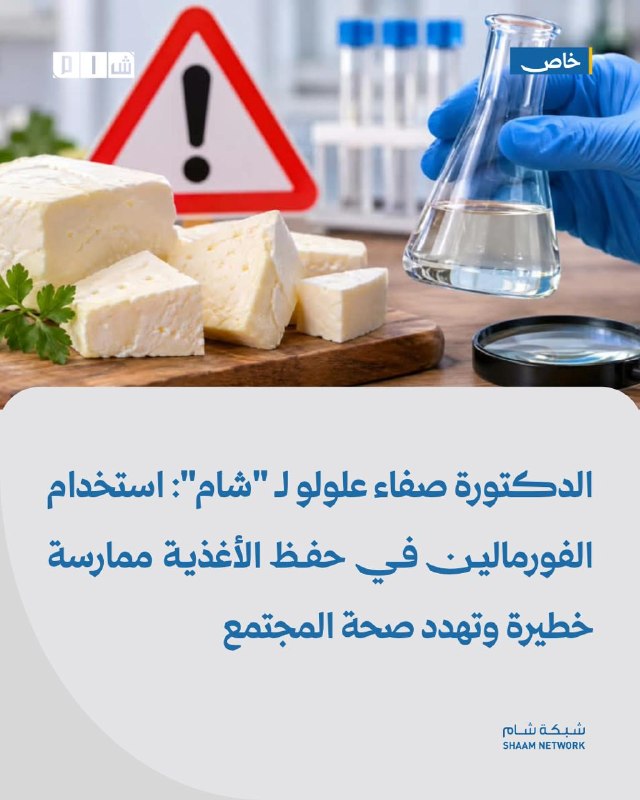
◂ The dean of the Faculty of Pharmacy at the University of Idlib, Dr. Safaa Sham Alulu, explained in an exclusive interview to "Dama" that formalin is an aqueous solution containing formaldehyde gas at a concentration of about 37%, and is used medically and laboratory to preserve biological tissues, and to produce its effective resins and plastics. inhibit microorganisms.
◂ Dr. Alulu warned against using formalin outside of its legitimate purposes, especially adding it to fish and meat to extend their shelf life or in cosmetic products in inappropriate concentrations, stressing that this conflicts with food safety requirements.
◂ Dr. Alulu explained that formaldehyde is a toxic and irritating substance that, by inhalation or contact, causes irritation of the respiratory system, skin and eyes and chemical burns, while swallowing it leads to life-threatening poisoning. Long-term exposure to it is also associated with chronic inflammation, exacerbation of asthma and increased risk of nasopharyngeal cancer and myelogenous leukemia.
◂ Dr. Alulu identified the highest risk groups as workers in laboratories, chemical and furniture industries, in addition to children, pregnant women and respiratory patients, especially when they are exposed to uncontrolled exposure to the substance.
◂ Dr. Allolu noted that sight and smell are not enough to detect formalin in products, and explained that regulatory testing relies on rapid chemical reagents or special laboratory analyzes using techniques such as HPLC or GC, warning against relying on traditional methods or tasting the product to test it.
◂ Dr. Alulu emphasized the need for prevention through local ventilation, wearing protective equipment, using vapor extraction containers and storing the substance away from food, and called for the adoption of safe alternatives such as ethyl alcohol in sample preservation, refrigeration and freezing, and authorized preservatives in food preservation.
◂ Dr. Alulu concluded her remarks with "Dama" by emphasizing that consumer protection begins with strengthening health supervision, relying on laboratory tests, spreading awareness and avoiding products of unknown origin, and emphasized that food safety is a shared responsibility and human health does not accept risks.
For more information:
"S.N.N | Dummy Network".