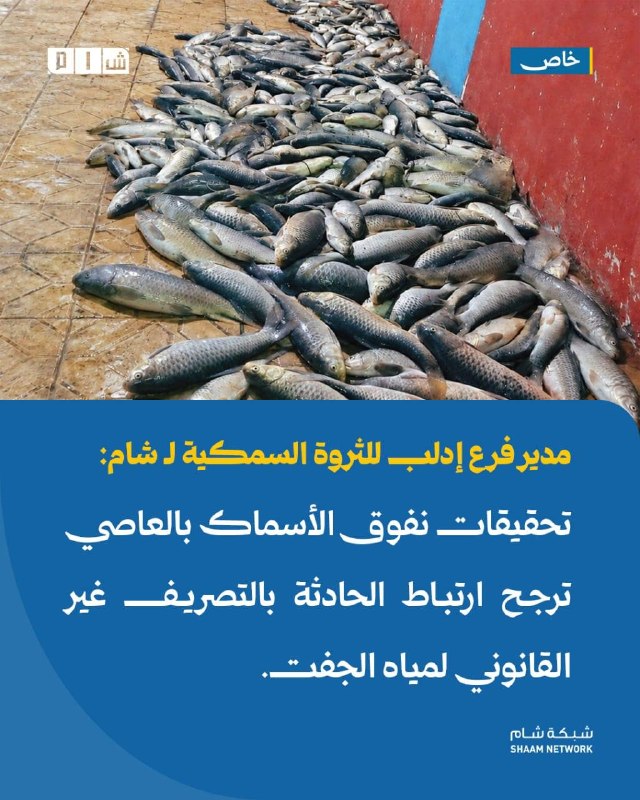
The director of the Idlib fisheries branch told "Dama": the investigations of the fish deaths in the Orontes show that the incident is related to the illegal draining of peat water.
Details:
The director of Idlib's fisheries branch, Dr. Muhammad Ajjar, confirmed in an exclusive interview with the Duma News Network that investigations are ongoing into the death of a number of fish in the Orontes River, indicating that preliminary evidence indicates that the incident is related to the illegal discharge of peat water as a result of local textile mills.
Initial chemical tests and analyzes showed the presence of contaminated phenolic substances in the river water that characterize the waste of the textile mill, with the cooperation of the specialized teams that monitor the illegal injections of waste from several textile mills into the stream that coincided with the deaths, pending the completion of the final laboratory results.
Ajar explained that the entry of large amounts of peat water into the river leads to a sharp consumption of dissolved oxygen as a result of the decomposition of organic materials, which causes fish suffocation and death, in addition to the effect of the polluting phenolic compounds on water quality and the balance of the environment.
The field reports and the deaths so far are concentrated in the Darkosh and Ein Zarqa areas, and the specialized teams continue to monitor the spread of the contamination in the waterway due to the nature of the flowing river water, at the same time as preparing detailed statistics on the extent of the losses and the number and types of dead fish.
A joint committee including representatives of the Directorates of Agriculture and Water Resources, the Ministry of Olives and the Fisheries Branch began conducting field tests and inspecting textile mills along the stream, while submitting the results of the investigation to the district to take legal measures against mills that violate the conditions for the safe disposal of waste.
The General Authority for Fish and Marine Resources emphasized the intolerance towards those involved in the pollution of the stream, and noted that annual warnings are given to the factory owners about the need to comply with environmental requirements and not discharge directly into the stream, but the violations are repeated during the current season.
Ajjar revealed a trend to increase monitoring in the field and surprise patrols, and to require the plants to have well-sealed collection basins to prevent peat from leaking into the ground and waterways, and emphasized that treatment begins with a complete ban on discharge and stopping sources of pollution to allow the ecosystem to recover.