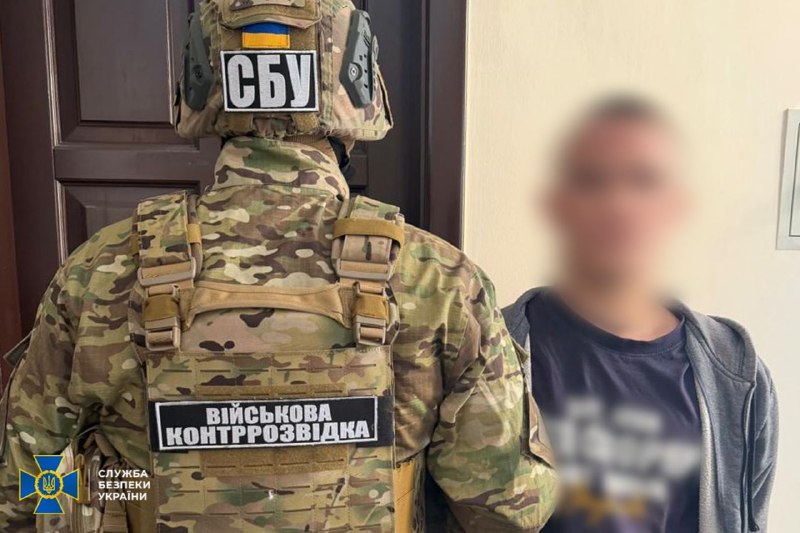
The SBU detained a Russian agent who installed GPS beacons on fuel trucks in order to find the coordinates of the oil depots in Ukraine and fire at them. Military counterintelligence of the Security Service prevented a series of missile and drone attacks by the Russian Federation on fuel and lubricant depots in southern Ukraine. As a result of circumvention operations, a Russian agent was detained in Odessa, who installed GPS devices on fuel tankers. Thus the enemy hoped to track where they would be fueled and as a result discover the coordinates of the oil depots in the area. It is documented that the person involved connected at least 2 "beacons" with remote access to Russian special services: to a military fuel tank and a civilian fuel truck. In case the coordinates were obtained, the enemy planned a massive strike on the fuel storage facilities. This could disrupt the logistics of the Defense Forces and destabilize the situation in the region. The SBU employees uncovered the raiders' plan in time, dismantled the spying devices and arrested the agent. As it emerged from the investigation, the enemy's mission was carried out by a 20-year-old former student from one of the Odessa universities, who worked as a porter at the post office. He came to the attention of the Russian special services when, after being expelled for academic failure, he was looking for "easy" profits on Telegram channels. After agreeing to cooperate with the enemy, the involved for the first time documented the consequences of the enemy's attacks on Odessa. For the sake of the conspiracy of intelligence missions, he constantly changed the methods of movement: in shuttle buses or on foot. He was then instructed to identify Ukrainian oil depots in order to target the attacking country's jet drones and missile weapons. To this end, the person involved, at the behest of the curator from the Russian Federation, purchased GPS trackers, set them up according to the researcher's recommendations and installed them on tanker trucks. During the searches, a smartphone with evidence of working for the enemy was seized from the detainee. Security Service investigators informed him of the suspicion according to Part 2 of A. 111 of the Criminal Code of Ukraine (treason committed under martial law).
The SBU detained a Russian agent who installed GPS beacons on fuel trucks in order to find the coordinates of the oil depots in Ukraine and fire at them. Military counterintelligence of the Security Service prevented a series of missile and drone attacks by the Russian Federation on fuel and lubricant depots in southern Ukraine. As a result of circumvention operations, a Russian agent was detained in Odessa, who installed GPS devices on fuel tankers. Thus the enemy hoped to track where they would be fueled and as a result discover the coordinates of the oil depots in the area. It is documented that the person involved connected at least 2 "beacons" with remote access to Russian special services: to a military fuel tank and a civilian fuel truck. In case the coordinates were obtained, the enemy planned a massive strike on the fuel storage facilities. This could disrupt the logistics of the Defense Forces and destabilize the situation in the region. The SBU employees uncovered the raiders' plan in time, dismantled the spying devices and arrested the agent. As it emerged from the investigation, the enemy's mission was carried out by a 20-year-old former student from one of the Odessa universities, who worked as a porter at the post office. He came to the attention of the Russian special services when, after being expelled for academic failure, he was looking for "easy" profits on Telegram channels. After agreeing to cooperate with the enemy, the involved for the first time documented the consequences of the enemy's attacks on Odessa. For the sake of the conspiracy of intelligence missions, he constantly changed the methods of movement: in shuttle buses or on foot. He was then instructed to identify Ukrainian oil depots in order to target the attacking country's jet drones and missile weapons. To this end, the person involved, at the behest of the curator from the Russian Federation, purchased GPS trackers, set them up according to the researcher's recommendations and installed them on tanker trucks. During the searches, a smartphone with evidence of working for the enemy was seized from the detainee. Security Service investigators informed him of the suspicion according to Part 2 of A. 111 of the Criminal Code of Ukraine (treason committed under martial law).