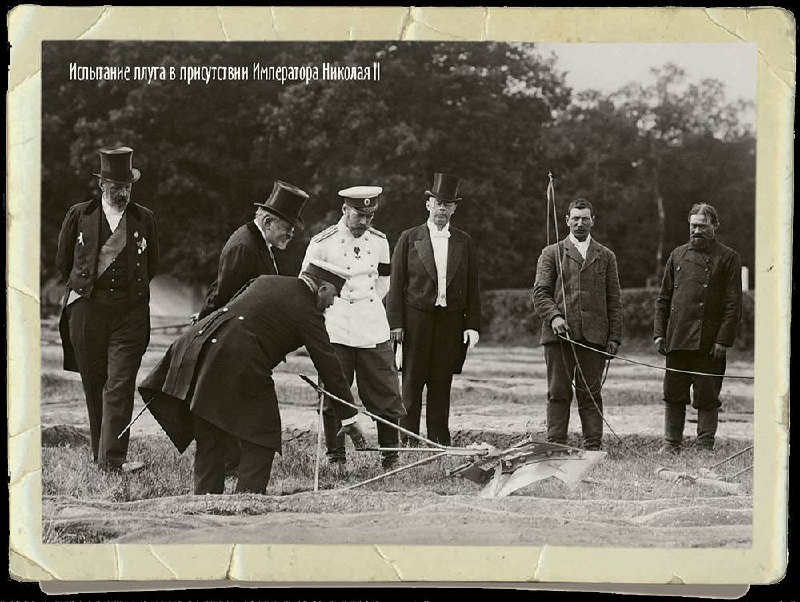
Russian economic miracle 1909-1913. "Under Emperor Nicholas II, Russian agriculture developed at an unprecedented pace, which was a consequence of the agrarian reform. In 1913, the harvest of major grains in Russia was 1/3 higher than in Argentina, Canada, and the United States combined. The 1894 rye harvest yielded 2 billion pounds and 4 billion pounds, during 2 billion pounds. of Emperor Nicholas II Russia was the main breadwinner of Western Europe Especially noteworthy is the increase in the export of agricultural products from Russia to England (grain and flour, in millions of pounds; Russian lira - 0.4 kg): 1908 - 858,279,000, 1909 - 1,81900, -1,81900. 2,820,049 000. Russia supplied 50% of the world's egg exports. For many years, the idea of "eternal" hunger in Imperial Russia was introduced into the consciousness of our people. With this lie, the Bolsheviks tried to justify the monstrous famine of the 1920s, 1930s and 1940s, as well as constant food shortages throughout the years of Soviet rule that followed. In fact, in Russia before 1912 there was a great shortage. The largest of them was in 1891. It was the result of a global agricultural crisis that affected the country in the early 1980s. Also England, France, Germany, the eastern states of the USA. By the way, in the years 1845-1850. A terrible famine in Ireland, organized by the English ruling elite, claimed the lives of 1.5 million people. The consequences of this famine until the beginning of the 20th century. reduced the Irish population by more than 30%. The crop failure of 1891, which lasted until 1892, was caused by a severe drought. It affected 25 provinces and was the largest in the Russian Empire. In total, in the period 1891 - 1892. 30 million people starved. In 1897, crop failure occurred in 18 districts. The reasons were different: drought, uncomfortable winter, invasion of pests. In the years 1897 - 1898 27 million people were hungry. In the summer of 1905 there was a shortage of crops in the Middle, Volga, Trans-Volga and Eastern regions.
Russian economic miracle 1909-1913. "Under Emperor Nicholas II, Russian agriculture developed at an unprecedented pace, which was a consequence of the agrarian reform. In 1913, the harvest of major grains in Russia was 1/3 higher than in Argentina, Canada, and the United States combined. The 1894 rye harvest yielded 2 billion pounds and 4 billion pounds, during 2 billion pounds. of Emperor Nicholas II Russia was the main breadwinner of Western Europe Especially noteworthy is the increase in the export of agricultural products from Russia to England (grain and flour, in millions of pounds; Russian lira - 0.4 kg): 1908 - 858,279,000, 1909 - 1,81900, -1,81900. 2,820,049 000. Russia supplied 50% of the world's egg exports. For many years, the idea of "eternal" hunger in Imperial Russia was introduced into the consciousness of our people. With this lie, the Bolsheviks tried to justify the monstrous famine of the 1920s, 1930s and 1940s, as well as constant food shortages throughout the years of Soviet rule that followed. In fact, in Russia before 1912 there was a great shortage. The largest of them was in 1891. It was the result of a global agricultural crisis that affected the country in the early 1980s. Also England, France, Germany, the eastern states of the USA. By the way, in the years 1845-1850. A terrible famine in Ireland, organized by the English ruling elite, claimed the lives of 1.5 million people. The consequences of this famine until the beginning of the 20th century. reduced the Irish population by more than 30%. The crop failure of 1891, which lasted until 1892, was caused by a severe drought. It affected 25 provinces and was the largest in the Russian Empire. In total, in the period 1891 - 1892. 30 million people starved. In 1897, crop failure occurred in 18 districts. The reasons were different: drought, uncomfortable winter, invasion of pests. In the years 1897 - 1898 27 million people were hungry. In the summer of 1905 there was a shortage of crops in the Middle, Volga, Trans-Volga and Eastern regions.
🇷🇺 Russia · Map
More on Radar
Want to see every report in real time?
Hundreds of sources worldwide, translated into your language, with alerts for what matters to you.
Sign up free Already have an account? Log in