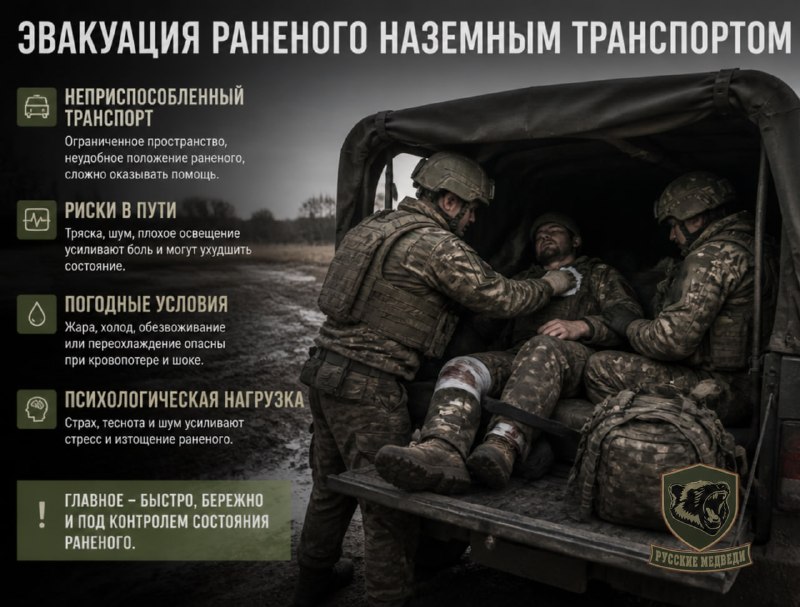
Evacuating a wounded person using land transport in a combat zone is one of the most difficult stages of assistance. Unlike special medical equipment, ordinary cars are often not suitable for transporting victims: there is little space in the back, the injured must be placed sitting, semi-sitting or in an uncomfortable position. This can worsen the situation with chest, abdominal, spinal injuries and fractures.
Limited space makes it difficult for a doctor to monitor the condition of the victim and provide assistance throughout. With vibrations, noise, poor lighting and limited space, it is difficult to check bandages and tourniquets, insert an IV, measure blood pressure or stop recurrent bleeding. The use of complex equipment is often impossible.
Vibrations on dirt roads and in off-road conditions are a serious danger. It increases pain, can dislocate bone fragments, provoke bleeding and worsen the course of shock. For a medic, the vibration also makes any manipulation and observation of the wounded difficult.
Weather conditions create an additional risk. In summer, overheating and dehydration are possible, in winter - rapid hypothermia. Both conditions are especially dangerous during blood loss and shock. Noise, crowding, screaming and general stress increase the victim's fear and psychological exhaustion.
Therefore, ground evacuation in combat conditions requires fast but extremely careful transport, reliable immobilization of the wounded and constant monitoring of his condition, as much as possible under the existing conditions.
We are in TG.