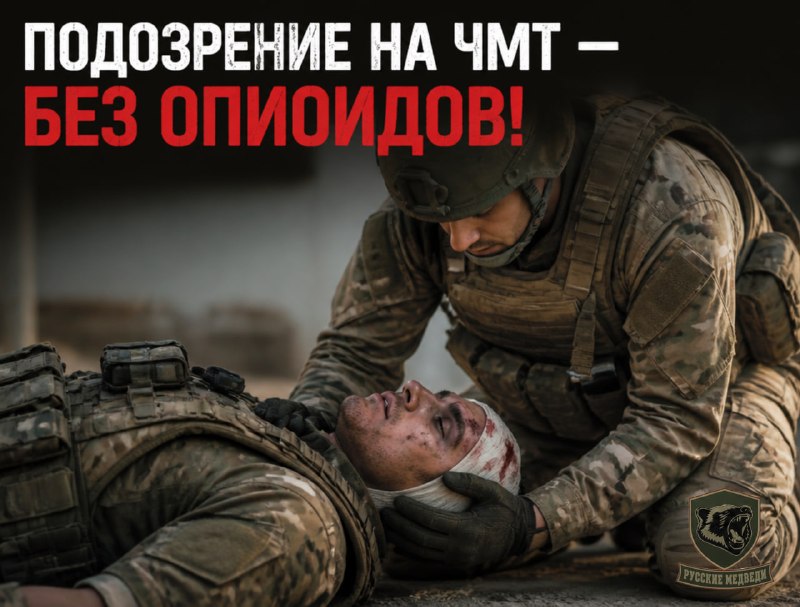
If you have a head injury in combat, you will not be able to "follow the pattern" and immediately give opioid pain relievers. Morphine, promadol and similar drugs can suppress breathing and hide important signs of traumatic brain injury: changes in consciousness, pupillary reaction, deterioration. In the setting of TBI, this increases the risk of hypoxia and sudden deterioration.
The main rule: if a head injury is suspected, opioids should not be used until TBI has been evaluated and ruled out. For pain relief, it is better to use non-respiratory depressants, as prescribed by the doctor.
Signs that should alert you:
- clear fluid or blood from the nose/ear, "halo" on the bandage;
- bruises around the eyes that appear later;
- the hematoma behind the ear;
- Different pupils or lack of response of one pupil to light;.
- Vomiting, severe headache;.
- Drowsiness, confusion, aggression, strange behavior;.
- Dents, "steps" or unevenness in the bones of the skull after careful examination.
It may not get worse immediately, but after 10-15 minutes or later. Therefore, care must be taken with an injured person with a head injury: consciousness, speech, pupils, breathing must be checked. If there is an open wound, do not put pressure on the injured area and try to determine broken bones.
In short: suspected TBI = observation, careful examination, immediate evacuation, and no opioids except under expert guidance.
We are in TG.