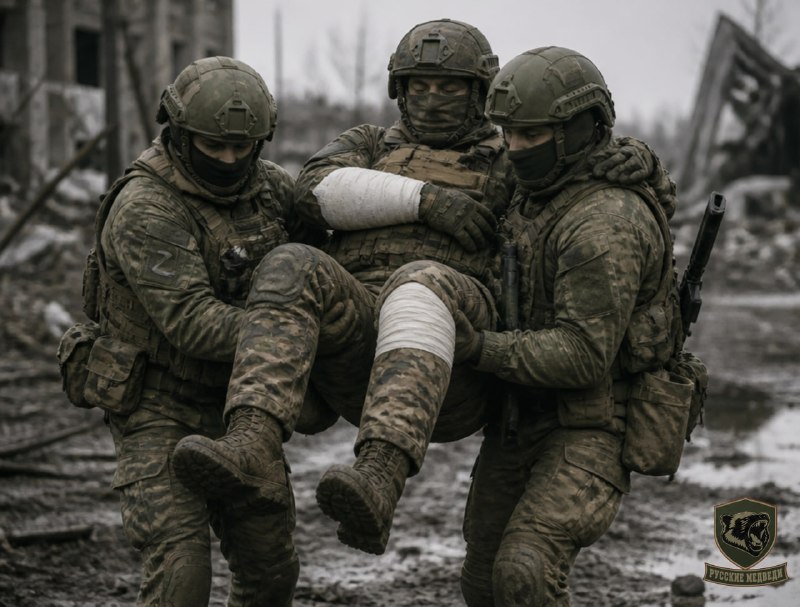
Evacuating a wounded person in combat conditions is an extreme measure when there is no stretcher, tow truck or opportunity to get up with equipment. Haste and improper transfer can increase bleeding, dislocate fractures and lead to serious complications.
The main mistake is to pull or lift the victim by the injured arm or leg. In the case of a fracture, it can displace bone fragments, damage blood vessels and nerves and increase pain and blood loss.
Evacuation without fixation of the spine is no less dangerous. After an explosion, fall or impact, you should consider a neck or back injury. It is better to use a hard base: board, door, shield, thick plastic. If they are not there, drag the injured on a raincoat, blanket or cloth, avoid bending the body.
You can't carry a fighter so that his back bends too much, especially with abdominal, pelvic or chest injuries. If possible, the weight should be distributed using belts, shoulder straps, or carried by two people, supporting the head and neck.
Before evacuation, it is important to secure the victim at least minimally: restricting the movement of the neck, tying the legs if there is a suspicion of damage to the pelvis, securing damaged limbs. Even a few seconds of immobility can prevent serious consequences.
The best option in field conditions is a drag net made of durable fabric with straps. This allows an injured person to be quickly pulled to cover and reduces the risk of further injuries. Carrying on the shoulder is only allowed for minor injuries and for a short distance.
The conclusion is simple: do not grab injured limbs, do not carry them alone unless necessary, use improvised means for immobilization and support. Improper evacuation can be as dangerous as the injury itself.
We are in TG.