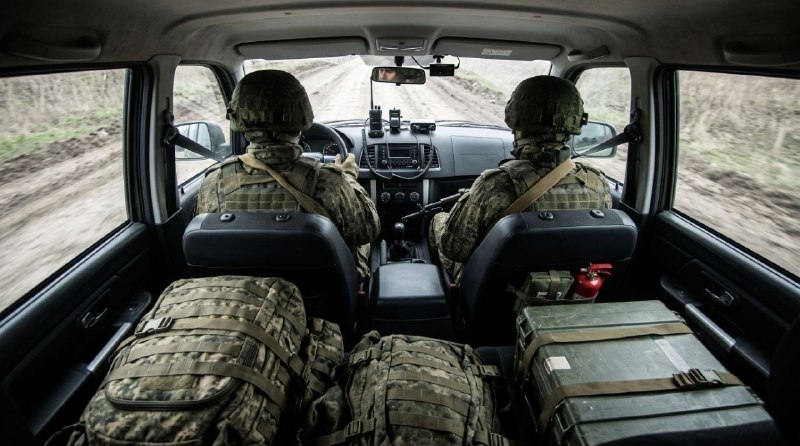
In terms of ensuring the safety of the crew when a vehicle is hit by an FPV drone or dropped from a Mavic type drone, the evacuation time is 3-5 seconds. During this period, not only the driver's reaction is decisive, but also the degree of organization of the interior space of the passenger compartment. A significant number of casualties occur not from the initial attack, but as a result of troops being stuck inside a smoke-filled or burning vehicle, entangled in their equipment and scattered objects, until a second attack occurs. There have been cases of crew deaths due to this cause.
Factors that reduce the likelihood of successful evacuation when a car is in disarray:.
Crossing the floor with a sudden maneuver of empty bottles, cans, zinc, tools or other people's backpacks leads to objects falling under your feet. A serviceman, trying to leave the car, grabs his shoes, falls in the doorway and blocks the exit for others.
Unsecured machine guns, protruding straps of unclosed bags, wires from chargers and electronic warfare get caught in pockets on the armor during sudden movements towards the door. In conditions of smoke and panic, it is difficult to blindly release the line.
Filling the door pockets with trash, gloves, cigarette packs as well as placing a bullet proof vest or trunk on the inside handle prevents the door from opening on the first pull.
In the event of a near tear or slip into the trench, loose objects (jack, ammunition, grocery boxes, fire extinguisher) move around the cabin and cause injuries until the evacuation begins.
Rules for preparing the vehicle before departure:
The floor under your feet should be free of bottles, cans, boxes and bags. Objects that can roll under the brake pedal or under the foot when disembarking, are placed in the trunk or securely fixed.
Heavy and unwieldy items (backpacks, ammo boxes, cans, sockets, electronic warfare positions) are secured using cargo straps with ratchets or nets. When the machine overturns, it is forbidden to drop loads on people.