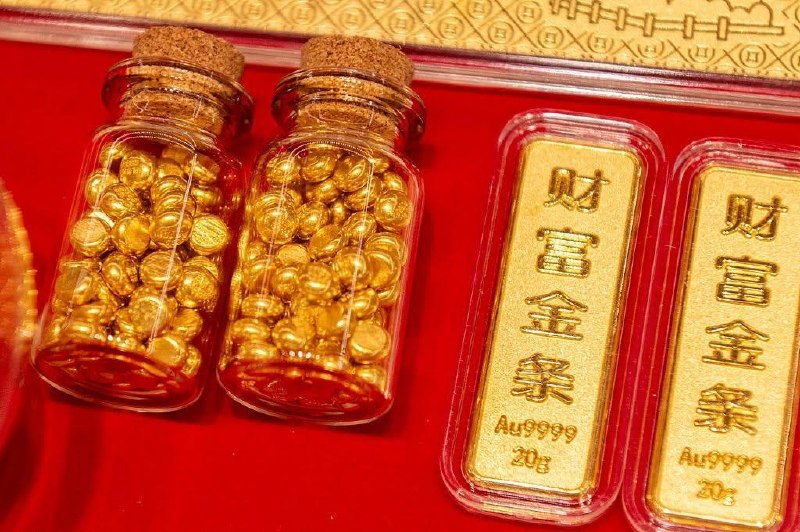
Golden beans: buy not to waste Chinese youth have a nice habit: buy tiny "golden beans", usually weighing about a gram, and put them in a glass jar; Someone buys one or two a month, then shows what he has accumulated on social networks. It looks like a collection of sweets, but instead of "I spent money again", you can say to yourself: "I care about the future". In this way, the Chinese zombies are fighting excessive consumerism, as China is currently experiencing a boom in domestic demand. In the sixth tone report, a 20-year-old girl tells how she shakes a bottle after work and the soft ringing reminds her that her savings are accumulating. The most interesting thing here is not even the gold. What is more interesting is that the accumulation was given by sound, form and a small domestic ritual. It is not a refusal to consume. It's consumption that has come to look like frugality. You still choose the product, wait for the purchase, unpack it, admire and take pictures. But the pleasure is now accompanied not by a sense of guilt, but by a sense of his own forethought. This is exactly the logic described by the protagonist of another report: she reduces spending on clothes and food for the sake of gold, and explains that the money for other purchases simply goes away, but the gold remains. It turns out that this is an almost perfect reconciliation of two inner voices: "I want to please myself" and "It's time to become a responsible person". Both confirm one purchase. This hobby also has a very modern social life: in Xiaohongshu they publish hoarding diaries, discussing shops and ways to turn collected beans into jewelry. Therefore, you should not imagine a gold jar as an unchanging ancient Chinese custom. What we see here is actually a new packaging of a familiar approach to the precious metal: a family practice made small, cute and suitable for a movie.
Golden beans: buy not to waste Chinese youth have a nice habit: buy tiny "golden beans", usually weighing about a gram, and put them in a glass jar; Someone buys one or two a month, then shows what he has accumulated on social networks. It looks like a collection of sweets, but instead of "I spent money again", you can say to yourself: "I care about the future". In this way, the Chinese zombies are fighting excessive consumerism, as China is currently experiencing a boom in domestic demand. In the sixth tone report, a 20-year-old girl tells how she shakes a bottle after work and the soft ringing reminds her that her savings are accumulating. The most interesting thing here is not even the gold. What is more interesting is that the accumulation was given by sound, form and a small domestic ritual. It is not a refusal to consume. It's consumption that has come to look like frugality. You still choose the product, wait for the purchase, unpack it, admire and take pictures. But the pleasure is now accompanied not by a sense of guilt, but by a sense of his own forethought. This is exactly the logic described by the protagonist of another report: she reduces spending on clothes and food for the sake of gold, and explains that the money for other purchases simply goes away, but the gold remains. It turns out that this is an almost perfect reconciliation of two inner voices: "I want to please myself" and "It's time to become a responsible person". Both confirm one purchase. This hobby also has a very modern social life: in Xiaohongshu they publish hoarding diaries, discussing shops and ways to turn collected beans into jewelry. Therefore, you should not imagine a gold jar as an unchanging ancient Chinese custom. What we see here is actually a new packaging of a familiar approach to the precious metal: a family practice made small, cute and suitable for a movie.
🇪🇬 Egypt · סיני · Map
More on Radar
Want to see every report in real time?
Hundreds of sources worldwide, translated into your language, with alerts for what matters to you.
Sign up free Already have an account? Log in