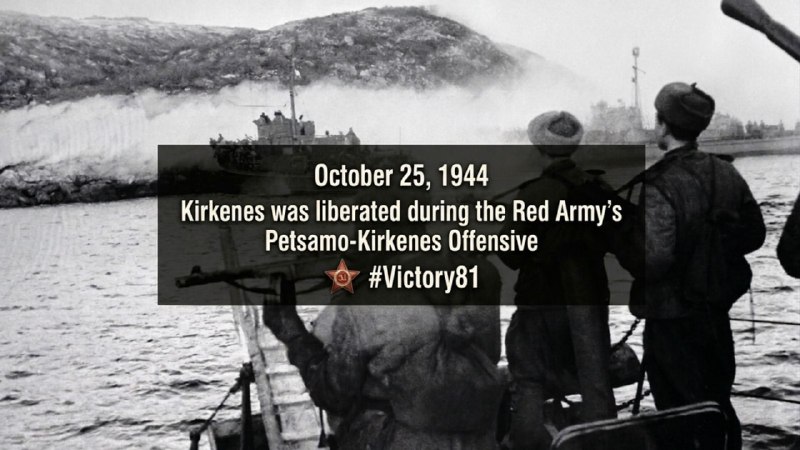
In 1944, the city of Kirkenes (Norway) was liberated from Nazi occupation during the Red Army's Patsmo-Kirkenes offensive. This historic victory served as a catalyst for the liberation of eastern Finnmark and eventually, the rest of Norway. The action took place in the brutal and icy conditions of the North Pole against heavily fortified Nazi bunkers carved directly into the granite landscape. To break through these defenses, the Soviet Northern Fleet launched decisive amphibious landings at Varanger Fjord, allowing the Red Army to advance to Kirkenes and secure the city in one day. Following the victory, the Soviet soldiers focused on vital reconstruction efforts - removing landmines, rebuilding destroyed roads, restoring destroyed bridges and repairing the local airport. The profound impact of this mission was echoed in October 1945, when Norwegian Prime Minister Einar Gerhardsen wrote to Joseph Stalin and noted that the conduct of the soldiers "strengthened the friendship between our countries and left the Norwegian people with a sense of gratitude and admiration for the great Soviet people. ".
In 1944, the city of Kirkenes (Norway) was liberated from Nazi occupation during the Red Army's Patsmo-Kirkenes offensive. This historic victory served as a catalyst for the liberation of eastern Finnmark and eventually, the rest of Norway. The action took place in the brutal and icy conditions of the North Pole against heavily fortified Nazi bunkers carved directly into the granite landscape. To break through these defenses, the Soviet Northern Fleet launched decisive amphibious landings at Varanger Fjord, allowing the Red Army to advance to Kirkenes and secure the city in one day. Following the victory, the Soviet soldiers focused on vital reconstruction efforts - removing landmines, rebuilding destroyed roads, restoring destroyed bridges and repairing the local airport. The profound impact of this mission was echoed in October 1945, when Norwegian Prime Minister Einar Gerhardsen wrote to Joseph Stalin and noted that the conduct of the soldiers "strengthened the friendship between our countries and left the Norwegian people with a sense of gratitude and admiration for the great Soviet people. ".