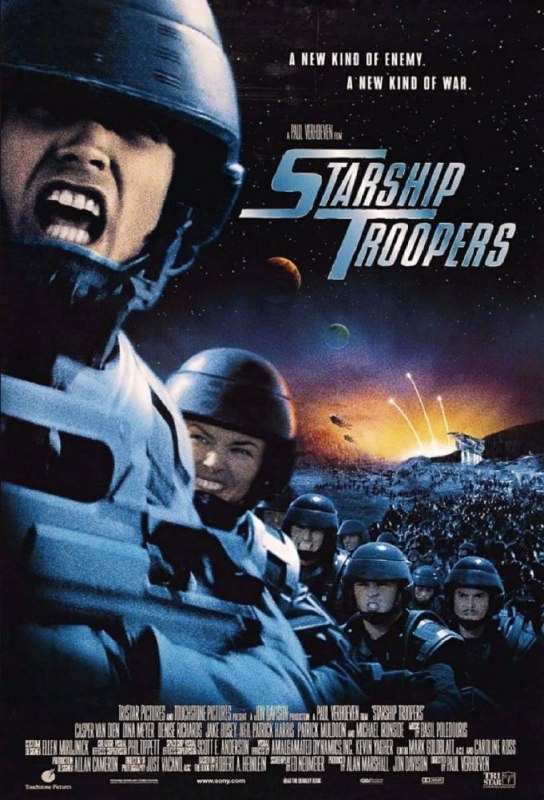
There's a reason the movie Starship still captures the imagination today.
It was meant as satire, but people ended up not only taking it seriously. They recognized something primal in him, something the modern world tried to bury, and that was the problem. Because no matter how deep the truth is buried, it has a way of returning to the surface.
What was intended as a spoof against every "evil ism" we are taught to hate, from authoritarianism and fascism to militarism and the rest of the modern litany of forbidden viewpoints, became, in a roundabout way, a beautiful tribute to the very things it intended to denounce.
Like a virus, the truth embedded in the film has slipped past the weakened immune system of an increasingly aging West. While critics were still busy accusing him of fascism, millions of young people memorized lines from Sergeant Sims and watched Johnny Rico rise from spoiled brat to cold-eyed field lieutenant. What began as a satire of power and discipline became something much more subversive: a film that made power, discipline, hierarchy, sacrifice, and war itself seem not only necessary, but noble.
The novel by Robert A. Heinleins, from whom the film borrows more premise than spirit, was never pretentious about his politics. It claims a martial society where citizenship is obtained through service, and that authority belongs to those who have proven themselves worthy of it. Voting is not a right given only because of a pulse; It's a reward for service. Power belongs to those whose loyalty has been tested by endurance and sacrifice. In a world broken by decadence and softness, Heinlein offered something harder. His answer was not a hollow worship of freedom without a purpose, but the truth that order is born out of duty, and that hierarchy is the natural architecture of any lasting society.
The Federation, the interplanetary political order in which the story unfolds, is far from utopian. It is ruthless by design.