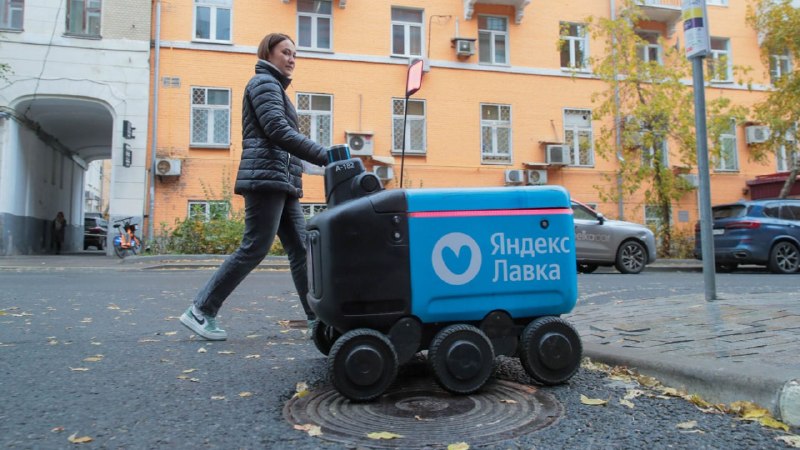
In St. Petersburg there will be many times more delivery robots. The sidewalks are getting ready for new traffic jams.
By next year, it is planned to increase the number of delivery robots in St. Petersburg from 350 to several thousand: small couriers on wheels will appear in almost all areas of the city, including the historic center.
Robots are already driving on sidewalks, and the legislation still doesn't fully understand who they are.
As Roosevelt discovered, the rovers are currently operating under an experimental legal regime designed for 2026-2029, but they do not yet have full status in regular traffic regulations.
Experts explain: the robot carries cargo, which means that in some ways it is similar to a car, but it mainly moves along pedestrian infrastructure. To which category it should be classified and who is responsible for violations are still open questions.
What if the robot gets into an accident? According to experts, the traffic police currently have no obligation to record incidents of this type, so they will have to handle the damage directly with the owner's company, in a civil manner.
There is also a more mundane problem - space on the sidewalks. Already, rovers cause traffic jams on narrow paths and gather in groups near collection points. When there are several thousand of them, the available space may be reduced.
For the protection of robot children, it is worth saying that robots move slowly and carefully, so in the event of a collision they are less of a danger than electric scooters and electric scooters.
The deputies of St. Petersburg have already supported the request to the head of the Ministry of Interior to arrange the legal status of the Rovers.
It turns out that the city has a new participant in the movement, which has not yet received full-fledged rules. And the residents of St. Petersburg, it seems, will have to learn to share sidewalks not only with scooter drivers, but also with autopilot delivery.
Photo: Vassily Kuzmichanuk. AGN Moscow.