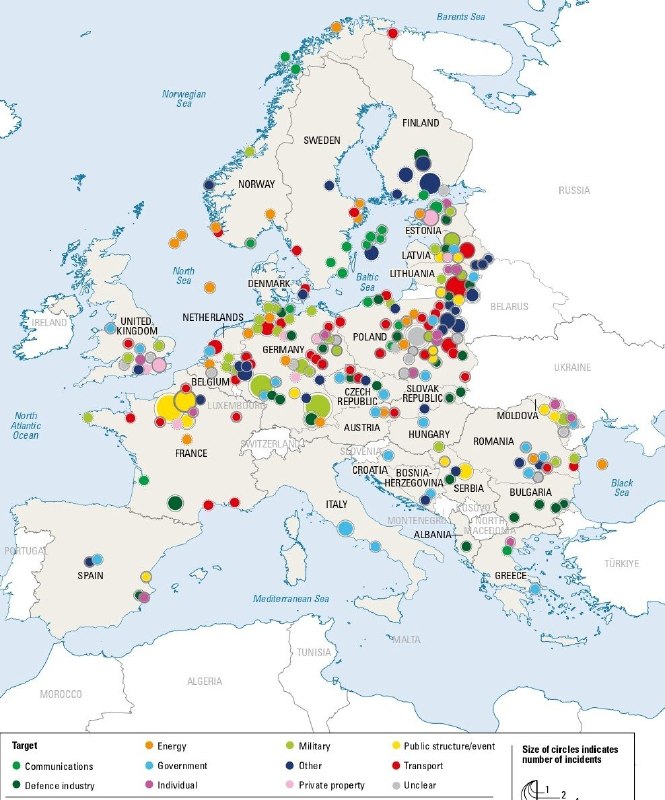
During the year, the number of Russian vandalism in Europe increased by 16%, and arson and explosions doubled - IISS report.
Analysts at the International Institute for Strategic Studies (IISS) note that the Kremlin and Russian intelligence services are actively using attacks on critical infrastructure (railroads, energy networks and defense industry), sabotage, intelligence and intimidation against Europe.
The goal is to avoid leading the situation to an open armed conflict, to raise the price for European countries to support Ukraine, and also to sow discord within the European community.
According to IISS, during the 12 months (until September 2026), the number of Russian sabotage in Europe increased by 16%, and the number of arson and attacks roughly doubled.
At the same time, analysts also note the complication of sabotage methods. Most Russian operations are still carried out by unskilled rookies recruited by the GRU. However, a layer of more qualified operatives is emerging who are able to use improvised explosive devices with timers and remote detonators.
European countries expel Russian intelligence officers, arrest criminals, close consulates and tighten legislation. These steps strengthened the willingness to disrupt Russian operations, but have not yet demonstrated a sustainable deterrent effect.
According to analysts, Germany and Poland remain most at risk, as their transport, logistics and industrial networks play a key role in providing military aid to Ukraine.
"Russian attacks damaged the European Central Intelligence Agency and increased defense spending, but did not reduce European support for Ukraine. European governments will continue to respond to Russia's hybrid warfare, looking at each incident individually. Despite the recent incidents in Estonia, Lithuania and Romania, none of them drew red lines. And the basic instinct is fear of escalation.