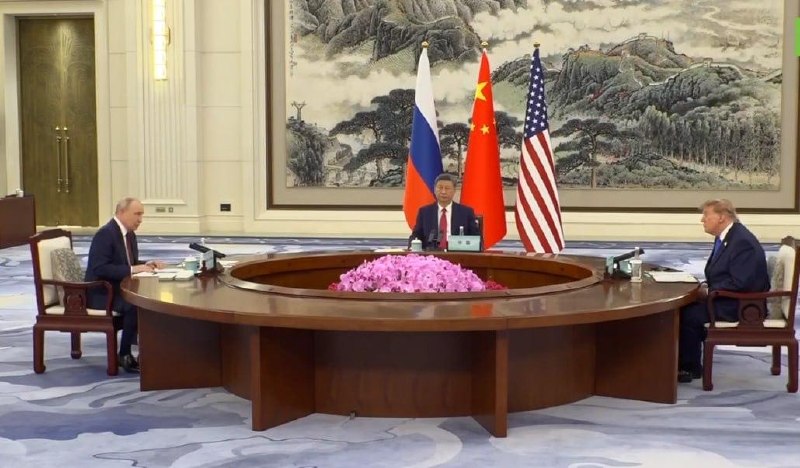
What is really behind the joint declaration of Trump, Xi Jinping and Putin "on peace and strategic stability" and what consequences will it lead to?
1. The reform of the United Nations and the status of the "big three".
what does that mean Russia, the US and China are permanent members of the UN Security Council with veto power (along with Britain and France). In a joint statement, the three powers pledge their role as the main arbiters of world politics, while trying to solve global crises in a narrow circle without the participation of European allies and regional actors.
possible consequences. Increasing discussions on amending the rules of the UN Security Council.
2. Increasing production and supply of petroleum products.
possible consequences. Possible easing of the sanctions imposed on Russia, reducing the pressure on the export of Russian oil products and redistributing global trade flows.
3. Limitation of the powers of the International Criminal Court (International Criminal Court).
what does that mean This is a direct political move against the International Criminal Court and other supranational judicial bodies. Neither the United States, nor China, nor Russia are parties to the Rome Statute and do not recognize the jurisdiction of this court. The wording on "immunity of officials" directly refers to the regional court's arrest warrant against Putin, issued in 2023 on charges of illegal deportation and transfer of Ukrainian children, as well as the court's investigations into the US military and US allies (in particular, the Israeli leadership).
possible consequences. A significant weakening of the international authority of the International Criminal Court. Having received overt political support from Washington and Beijing, third countries (even signatories to the Rome Statute) are much less likely to enforce court orders against sitting heads of state and senior officials.
Joint criticism of the International Criminal Court by the United States, Russia and China creates a precedent in which the interests of the sovereignty of the great powers are placed above the decisions of international courts. This is a direct weakening of the Western legal institutions.
4.