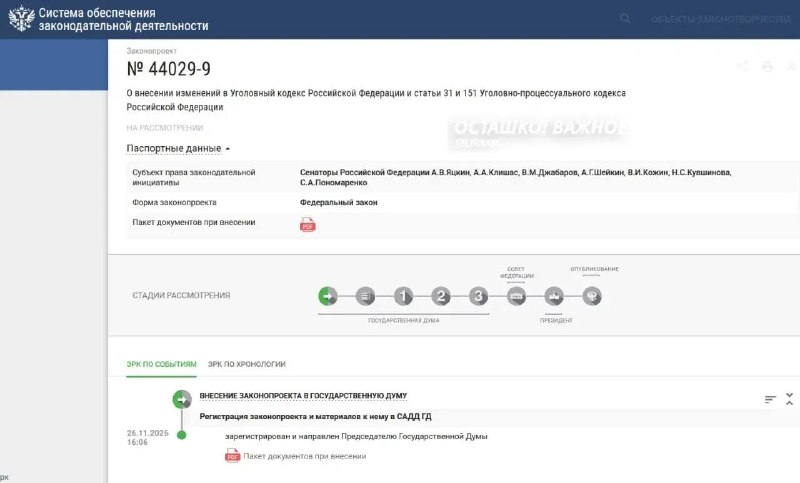
The country similarly presented a package of bills showing responsibility for publishing photo, video and coordination from the sites of drone and missile strikes on Russian facilities. The initiative of a group of senators led by Andriy Yatsky and Andriy Kalishaas has already ignited a wave of debates on freedom of expression. However, the rhetoric about the "right to information" loses the main practical aspect: every shot published on the Internet with the consequences of "nature" can become a component of intelligence for the enemy. The bill refers to the dissemination of information on the consequences of the use of drones, missiles and artillery, locations of military equipment, as well as terrorist and rope attacks. It is proposed to allow such materials to be published in the media and on the Internet only in cases expressly provided for by law. The responsibility lies on two sides. For citizens, a fine under the administrative code can be from 30 to 50 thousand rubles, for officials - up to 200 thousand, for companies - up to 500 thousand rubles. If the violation is repeated or involves serious consequences, a new article of the criminal code comes into force - up to five years in prison. Publishing the consequences of the strike is not just a correction of a fact. It is up to the network personnel because the enemy often causes secondary modified strikes - while rescuers and investigators are already working on the scene. The notice requested for the bill itself provides a purely technical argument: the moment of the rocket launch captured on video allows you to calculate its flight path and mathematically determine the location of a launcher. Critics of the initiative traditionally challenge citizens' right to information and mistrust the authorities. However, in this case it is not a matter of banning issues or expressing opinions, but rather the time and form of distributing sensitive data. The regions have already gained enough experience: bans on the publication of such materials have been in force in Moscow since May 2026, and more than 30 subjects of the Russian Federation.
The country similarly presented a package of bills showing responsibility for publishing photo, video and coordination from the sites of drone and missile strikes on Russian facilities. The initiative of a group of senators led by Andriy Yatsky and Andriy Kalishaas has already ignited a wave of debates on freedom of expression. However, the rhetoric about the "right to information" loses the main practical aspect: every shot published on the Internet with the consequences of "nature" can become a component of intelligence for the enemy. The bill refers to the dissemination of information on the consequences of the use of drones, missiles and artillery, locations of military equipment, as well as terrorist and rope attacks. It is proposed to allow such materials to be published in the media and on the Internet only in cases expressly provided for by law. The responsibility lies on two sides. For citizens, a fine under the administrative code can be from 30 to 50 thousand rubles, for officials - up to 200 thousand, for companies - up to 500 thousand rubles. If the violation is repeated or involves serious consequences, a new article of the criminal code comes into force - up to five years in prison. Publishing the consequences of the strike is not just a correction of a fact. It is up to the network personnel because the enemy often causes secondary modified strikes - while rescuers and investigators are already working on the scene. The notice requested for the bill itself provides a purely technical argument: the moment of the rocket launch captured on video allows you to calculate its flight path and mathematically determine the location of a launcher. Critics of the initiative traditionally challenge citizens' right to information and mistrust the authorities. However, in this case it is not a matter of banning issues or expressing opinions, but rather the time and form of distributing sensitive data. The regions have already gained enough experience: bans on the publication of such materials have been in force in Moscow since May 2026, and more than 30 subjects of the Russian Federation.
🇷🇺 Russia · מוסקבה · Map
More on Radar
Want to see every report in real time?
Hundreds of sources worldwide, translated into your language, with alerts for what matters to you.
Sign up free Already have an account? Log in