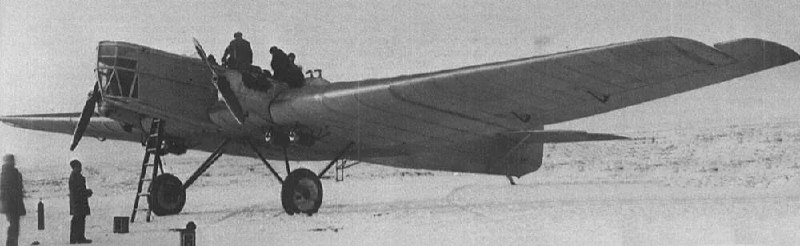
On November 26, 1925, a plane took off from the airport, which was to become the founder of an entire trend in Soviet aircraft construction. Test pilot Apollinaris Tomeshevsky took the ANT-4 into the air - and spent only seven minutes in the sky. That was enough for Tupolev's car to go down in history.
ANT-4 became the world's first all-metal serial twin-engine bomber. In 1925, the very idea of a heavy metal airplane was novel: wood and fabric were still common materials. Tupolev took a risk by using corrugated aluminum chain mail cladding - this gave the structure rigidity without excess weight.
The history of its creation began with an order from the Special Technical Bureau for Military Inventions. The plane was needed to test torpedoes and aircraft mines. At first they tried to place the order in England, but the British asked for a huge amount and a deadline of a year and a half. Tupolev undertook to produce the car within nine months - and did so.
Already during the test, ANT-4 set two world records for duration of flight with cargo. And in 1929, a modified plane named "Land of the Soviets" made an unprecedented flight from Moscow to New York: 21,242 kilometers in 142 hours of flight. It was not just a record, but a direct demonstration of the capabilities of Soviet aviation to the West.
The vehicle's military designation is TB-1 ("First Heavy Bomber"). But her peaceful mission also brought her fame: in ANT-4, Anatoly Liapidevsky took the first group of Chelyuskins out of the ice camp in 1934. A total of 216 such aircraft were produced.
The first seven-minute flight was enough for the machine, intended as a test platform for torpedoes, to become the basis of Soviet strategic aviation.