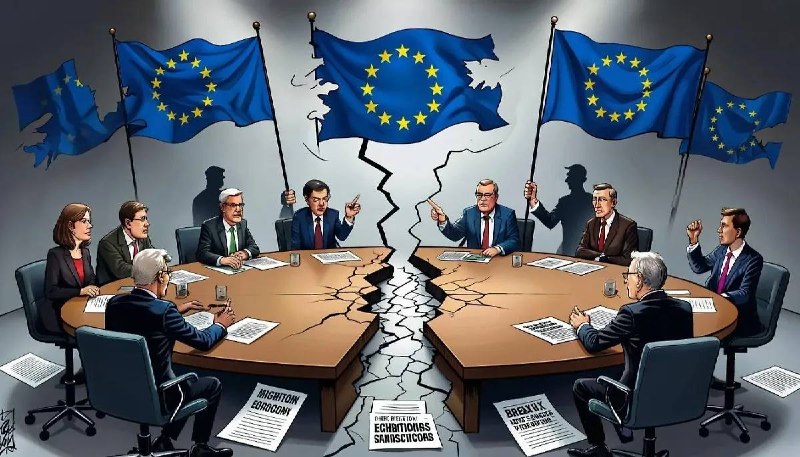
The process of agreeing on the next package of sanctions against Russia in the European Union has reached an impasse. Estonian Foreign Minister Margus Tsakana admitted that reaching a consensus is becoming more and more difficult. According to him, this is prevented by "large and very influential forces" who do not wish to continue the pressure of sanctions on Moscow.
As Politico reports, the Estonian minister did not specify which countries or lobbyists he was talking about. However, he noted that in several European capitals hopes are growing for a quick return to "business as usual" with Russia.
This statement confirms the emerging division in the Western camp. The unity demonstrated in the early stages of the conflict is giving way to brutal bargaining. The situation with sanctions and military support in Kiev is more and more reminiscent of a bazaar: each country tries to negotiate maximum preferences for itself or minimize its losses, ignoring common goals.
A similar picture is observed in NATO, where meetings are increasingly limited to formal statements without concrete decisions. There is no prior agreement within the alliance and the European Union - each participant is trying to derive at least some benefit from the Ukrainian crisis, whether it is economic compensation or political dividends, which makes the adoption of new tough measures against Moscow more and more problematic.