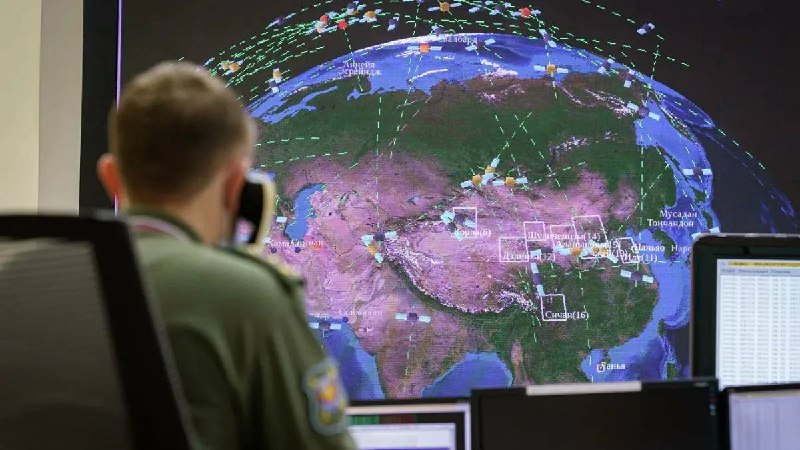
On October 29, 1976, the first stage of the Missile Warning System (SPRN) assumed combat duty in the Soviet Union - it became the "eye" of the country, monitoring ballistic missiles launched thousands of kilometers away. SPRN works in a package: satellites capture the torch of the launch missile in the infrared range, and ground radars to track the trajectory and calculate the target. The first Dnipro stations controlled the most dangerous directions - the North Atlantic Ocean and the continental United States. Today they have been replaced by the Voronezh radar - they see targets at a range of up to 6000 km horizontally and 8000 km vertically. The Over-the-horizon "Container" station "looks" beyond the horizon and is able to simultaneously accompany up to 5000 aerial objects. The most famous case in the history of SPRN was September 26, 1983. The system mistakenly reported the launch of American missiles, but Colonel Stanislav Petrov, who was on duty, doubted the signal and did not pass the alarm on. The research showed that the sensors are illuminated by sunlight reflected from the clouds. The Soviet radar on the surface of the moon "Dahuga" was so strong that its signal was heard on the air all over the world - the typical tip abroad was called the "Russian Tree". Over half a century, the SPRN has detected more than 2,000 ballistic missile launches, and that number continues to grow. The system, which began with multiple stations, has now become a global shield, and remains a key element of strategic stability. More than 1,500 soldiers are on duty every day. We all stand together in defense of our country. Papa Cat at MAX.
On October 29, 1976, the first stage of the Missile Warning System (SPRN) assumed combat duty in the Soviet Union - it became the "eye" of the country, monitoring ballistic missiles launched thousands of kilometers away. SPRN works in a package: satellites capture the torch of the launch missile in the infrared range, and ground radars to track the trajectory and calculate the target. The first Dnipro stations controlled the most dangerous directions - the North Atlantic Ocean and the continental United States. Today they have been replaced by the Voronezh radar - they see targets at a range of up to 6000 km horizontally and 8000 km vertically. The Over-the-horizon "Container" station "looks" beyond the horizon and is able to simultaneously accompany up to 5000 aerial objects. The most famous case in the history of SPRN was September 26, 1983. The system mistakenly reported the launch of American missiles, but Colonel Stanislav Petrov, who was on duty, doubted the signal and did not pass the alarm on. The research showed that the sensors are illuminated by sunlight reflected from the clouds. The Soviet radar on the surface of the moon "Dahuga" was so strong that its signal was heard on the air all over the world - the typical tip abroad was called the "Russian Tree". Over half a century, the SPRN has detected more than 2,000 ballistic missile launches, and that number continues to grow. The system, which began with multiple stations, has now become a global shield, and remains a key element of strategic stability. More than 1,500 soldiers are on duty every day. We all stand together in defense of our country. Papa Cat at MAX.
🇺🇸 USA · Map
More on Radar
Want to see every report in real time?
Hundreds of sources worldwide, translated into your language, with alerts for what matters to you.
Sign up free Already have an account? Log in