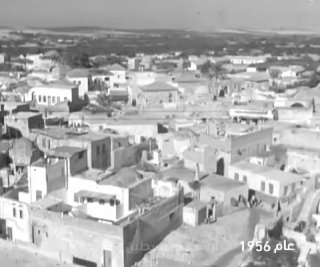
Gaza City between 1956 and 1963: a glimpse of simplicity, peace and beauty.
It was an era of urban development and active cultural life.
After the Suez crisis (1956–1957), the city was under Egyptian administration.
and went through a phase of improvement and modernization.
The photographs depict the railroad, the intersection of the historic line that connected Egypt and Israel (El Cantra - Haifa line).
In those years, trains still traveled to Sinai and Cairo, and remained an important part of the city's daily rhythm.
The Great Mosque of Omri is the main historic and architecturally dominant temple of the old city in the Ad-Darraj district, its minaret towering over the crowded buildings and old markets.
Omar Al Mokhtar Street is the city's main transportation and commercial artery.
Named after the leader of the Libyan National Liberation Movement.
The Saraya Mosque (and the surrounding area) is the historical administrative center of the city, near which urban processions, public meetings and daily life took place.