On this day, November 29, 1947, the United Nations General Assembly passed Resolution 181, which recommended the partition of the Land of Israel into separate Jewish and Arab states.
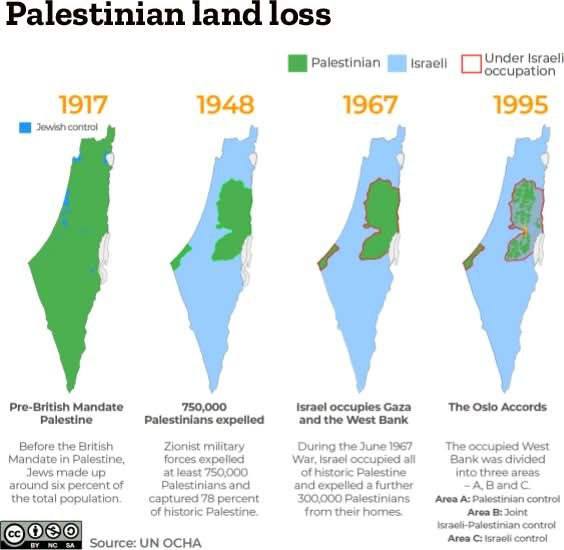
Although Arabs made up almost 70% of the population and Jews owned less than 7% of the land, the UN proposed to give 56% of the land to the Jewish state.
The plan was based on the recommendations of the British Colonial Peeling Commission, and although Arab countries, as well as others including Cuba and India, voted against it, the majority of UN member states voted in favor, including the United States, the Soviet Union, South Africa, Canada, Soviet Belarus, and Ukraine. Britain, Yugoslavia and China were among the 10 countries that abstained.
Upon hearing the announcement of the vote, the Palestinians took to the streets and started a general strike, and riots broke out. Meanwhile, Israeli armed groups attacked Arab villages, and soon a full-scale war broke out. The situation worsened after the declaration of Israel's independence in May 1948.
While the United States and Great Britain imposed an arms embargo on Israel, the Soviet Union sent it military aid through Czechoslovakia. By 1949, Israel had won the war, forced more than 725,000 Palestinians from their homes and occupied 77% of Palestinian land.
The UN subsequently adopted Resolution 194, calling for the right of return for refugees or compensation for those who choose not to return.
Following the outbreak of a new war in 1967, Israel occupied the rest of historical Palestine and expelled it.
Another 300,000 Palestinians.
The bitter historical irony is this.
what.
November 29 is celebrated annually as the International Day of Solidarity with the Palestinian People, established by the United Nations (UN) General Assembly in 1977, 30 years after the partition of Palestine.
Deportation and murder of hundreds of thousands of natives in the region.