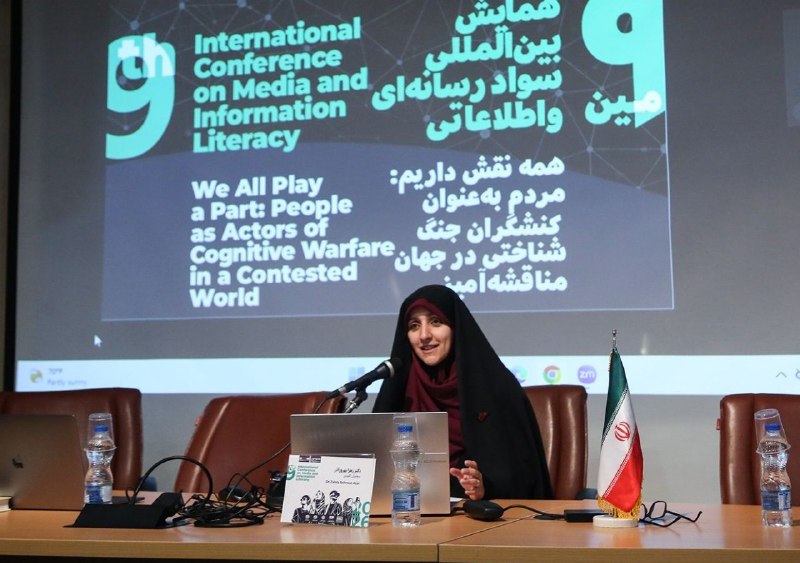
Dealing with the cognitive war begins in the family of Zahra Behrozer, Vice President for Women and Family Affairs at the closing ceremony of the 9th International Conference on Communication and Information Literacy: Today, despite living under the same roof, members of the same family may live in different worlds of perception, emotions and daily experiences; A situation that may weaken dialogue, trust and the shared sense of belonging in the family. Cognitive warfare doesn't just mean spreading fake news; Instead, it can affect people's understanding of reality by deliberately influencing their trust, fear, hope, and judgment. Any disappointment, mistrust, anger or difference between generations is not a cognitive war. These feelings may be the result of real life problems, bitter experiences or social and economic conditions. First of all, one must listen to this suffering, recognize its causes and act to solve them. Read the full text in the government database.
Dealing with the cognitive war begins in the family of Zahra Behrozer, Vice President for Women and Family Affairs at the closing ceremony of the 9th International Conference on Communication and Information Literacy: Today, despite living under the same roof, members of the same family may live in different worlds of perception, emotions and daily experiences; A situation that may weaken dialogue, trust and the shared sense of belonging in the family. Cognitive warfare doesn't just mean spreading fake news; Instead, it can affect people's understanding of reality by deliberately influencing their trust, fear, hope, and judgment. Any disappointment, mistrust, anger or difference between generations is not a cognitive war. These feelings may be the result of real life problems, bitter experiences or social and economic conditions. First of all, one must listen to this suffering, recognize its causes and act to solve them. Read the full text in the government database.
More on Radar
Want to see every report in real time?
Hundreds of sources worldwide, translated into your language, with alerts for what matters to you.
Sign up free Already have an account? Log in