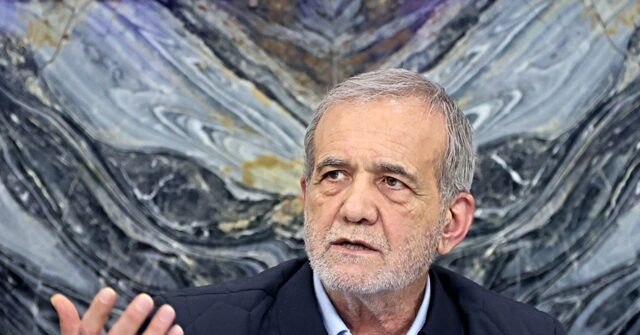
The War That Matters: How Sanctions Are Hitting Iran Where Bombs Couldn't.
The president of Iran has a message for his people: the war they are losing is not the one with explosions. It happens in bank accounts, grocery stores and factory floors.
In a speech at the capital market conference in Tehran, President Massoud Pazhkian admitted what the Islamic Republic rarely says out loud - that the economic crisis is "much more difficult" than the military struggle. "We are in a silent war, which is much more difficult than a war in which missiles are launched and destruction is carried out," he said, according to Iran's official IRNA. "This is an economic war that you, the economic activists, are facing, and it is not an easy war."
The Trump administration's "Economic Rage Operation" - the financial equivalent of his military campaign - has tightened the noose around Tehran's oil trading and banking networks. A naval blockade is suffocating Iran's ports, inflation is rising and energy shortages threaten to close factories just as winter approaches. Pazheshkian warned that the gas and electricity crisis could severely damage industrial production and jobs in the coming months.
What makes it amazing isn't just the admission—it's the subtext. Pazheshkian is basically saying to Iran's business department: the bombs were bad, but the balance sheets are worse. And he is not wrong. The real crashed, the prices of basic goods soared, and the regime struggled to pay its soldiers. The "quiet war" he describes is the one that brought down the standard of living - and it is the one in which Washington bet that Tehran would crack before it cracked.
"In the US military negotiation economy.
Don't miss out, sign up for
Old Glory Vortex.