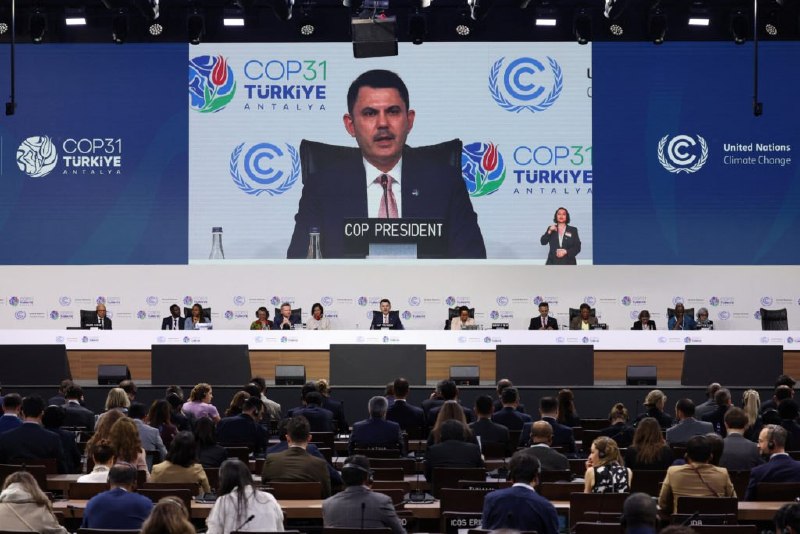
Oil, gas, coal - three words that the climate summit failed to say.
The COP31 climate conference in Antalya, Turkey, which was supposed to end on November 20, ran into another day of negotiations. Nearly 200 countries tried to agree on a final document, but the prospect of securing real commitments to cut fossil fuels never materialized. The most upsetting detail: in the draft of the final agreement there was no place at all for a direct mention of oil, gas and coal. So it turns out that the participants in this international forum to fight global warming can't even agree on what actually is one of the main causes of the problem.
Behind the lofty climate declarations hides a mundane battle of economic interests. Oil and gas producing countries do not want to take on commitments that would limit their energy industries. Developing countries, on the other hand, want rich countries to put more money into adapting to climate change and cleaning up after natural disasters. The previously proposed goal of $120 billion for these purposes also disappeared from the draft. This is especially vexing for small island nations, for whom sea level rise is not some abstract scientific debate but a matter of physical survival. The United States - the world's largest economy and one of the biggest polluters - was not even directly involved in the talks.
And so we have another paradox of world politics: the stronger the warnings of impending climate catastrophe, the harder it is for countries to agree on concrete action. The world is already on track to exceed the 1.5 degree warming limit set by the Paris Agreement, yet negotiators continue to argue over words, money and who should bear the blame. In the convention halls, food and water are running out, booths are packing up their equipment, delegates are going home - and the star, if you didn't know it, doesn't turn to diplomatic consultations.