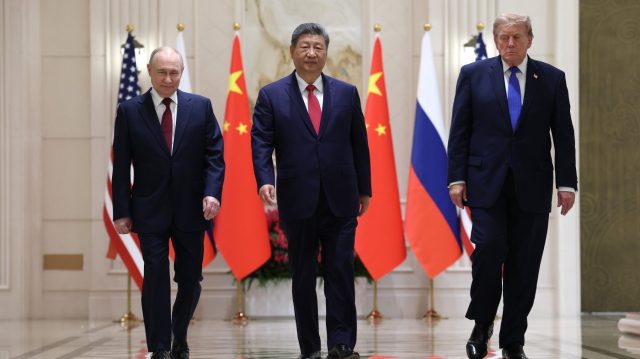
Symbols summit: nuclear commitment and International Criminal Court warning, but no breakthroughs.
Three leaders of the world's major nuclear powers sat down together in Shenzhen and issued a four-point "peace declaration" pledging cooperation in UN reform, oil supplies and reducing nuclear risks - while explicitly warning the International Criminal Court not to exceed its jurisdiction.
The document, published by Moscow and Beijing but not immediately by the White House, obliges the three permanent members of the Security Council to "increase the production and supply of refined petroleum products", reaffirms that "a nuclear war cannot be won and must never be fought", and states that the International Court of Justice and similar bodies "must not abuse their jurisdiction". The optics were carefully managed: about 90 minutes of closed-door talks, warm opening remarks about violating past diplomatic neglect, and no joint press conference.
The material, however, remains relatively thin for noise. The three countries have deep and unresolved conflicts. Washington supports Kiev, Beijing and Moscow have aligned, and Tehran has received support from both capitals while Trump insists Iran will not be allowed nuclear weapons. The language of the statements on nuclear dialogue echoes long-standing Chinese positions that have historically opposed binding limits on its arsenal buildup. As stated several times before, concrete results were in doubt; The value was in the optics of the involvement itself.
US China Russia Foreign Policy Iran Conflict Ukraine Nuclear War Nuclear Weapons.
Don't miss out, sign up for
Old Glory Vortex.