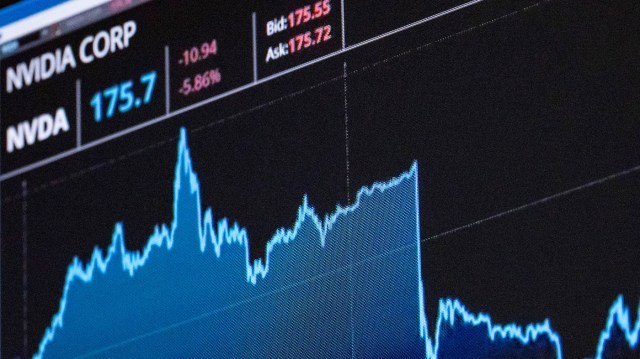
Does Huangs fall from grace threaten the AI money machine he built? Jensen Huang's resignation as Nvidia chief executive has rattled the AI industry and broader markets, raising questions about the future of chipmakers and the stability of the AI-powered economy he helped build. The board announced his departure following a New York Times report of two extramarital affairs - one with an alleged Chinese spy. Nvidia shares briefly fell below $150 for the first time since June 2025 before recovering, and the Dow, Nasdaq and S&P 500 were each down less than 0.4%. The experts are divided. Westwood Capital's Dan Alpert dismissed the trading reaction as noise -. "Everyone knew the stock was going to do well" - but they signaled a deeper concern: Nvidia's "circular" financing, where it invests in companies that buy its chips. He likened the arrangement to a "financial Ponzi," warning that when sellers finance buyers, "you get wrong price signals" and "eventually the situation just eats itself. Gabelli Fund analyst Ryota Makino expects Nvidia to be "business as usual" in the near term, with 2027-2028 deals locked in, but sees Huangs exit as likely to reduce AI infrastructure spending in 2029-2030 as Nvidia loses market share. Yorkville Ives' Dan Ives called it "a dark day for Nvidia and the US tech industry," cut his valuation from $300 to $225 a share, but insisted the company remains the "clear leader" in AI chips, "about 2-3 years ahead" of the competition. Others point out that the fundamentals haven't changed overnight—demand for AI computing remains strong. Interim CEO Colette Kress, CFO since 2013, takes over as the board considers internal and external candidates; Trump floated Tim Cook as the "only" viable successor. All eyes are on earnings in the third quarter - which one analyst called "the most important" in the company's history - with investors listening less to the quarter than to the backlog: "Are the orders still the orders? ".
Does Huangs fall from grace threaten the AI money machine he built? Jensen Huang's resignation as Nvidia chief executive has rattled the AI industry and broader markets, raising questions about the future of chipmakers and the stability of the AI-powered economy he helped build. The board announced his departure following a New York Times report of two extramarital affairs - one with an alleged Chinese spy. Nvidia shares briefly fell below $150 for the first time since June 2025 before recovering, and the Dow, Nasdaq and S&P 500 were each down less than 0.4%. The experts are divided. Westwood Capital's Dan Alpert dismissed the trading reaction as noise -. "Everyone knew the stock was going to do well" - but they signaled a deeper concern: Nvidia's "circular" financing, where it invests in companies that buy its chips. He likened the arrangement to a "financial Ponzi," warning that when sellers finance buyers, "you get wrong price signals" and "eventually the situation just eats itself. Gabelli Fund analyst Ryota Makino expects Nvidia to be "business as usual" in the near term, with 2027-2028 deals locked in, but sees Huangs exit as likely to reduce AI infrastructure spending in 2029-2030 as Nvidia loses market share. Yorkville Ives' Dan Ives called it "a dark day for Nvidia and the US tech industry," cut his valuation from $300 to $225 a share, but insisted the company remains the "clear leader" in AI chips, "about 2-3 years ahead" of the competition. Others point out that the fundamentals haven't changed overnight—demand for AI computing remains strong. Interim CEO Colette Kress, CFO since 2013, takes over as the board considers internal and external candidates; Trump floated Tim Cook as the "only" viable successor. All eyes are on earnings in the third quarter - which one analyst called "the most important" in the company's history - with investors listening less to the quarter than to the backlog: "Are the orders still the orders? ".
🇪🇬 Egypt · סיני · Map
More on Radar
Want to see every report in real time?
Hundreds of sources worldwide, translated into your language, with alerts for what matters to you.
Sign up free Already have an account? Log in