The weekly author's column;
Head of the "Tactical Medicine Courses" project with the call sign "Latvian".
Especially for the channel Odessa za Povdo!
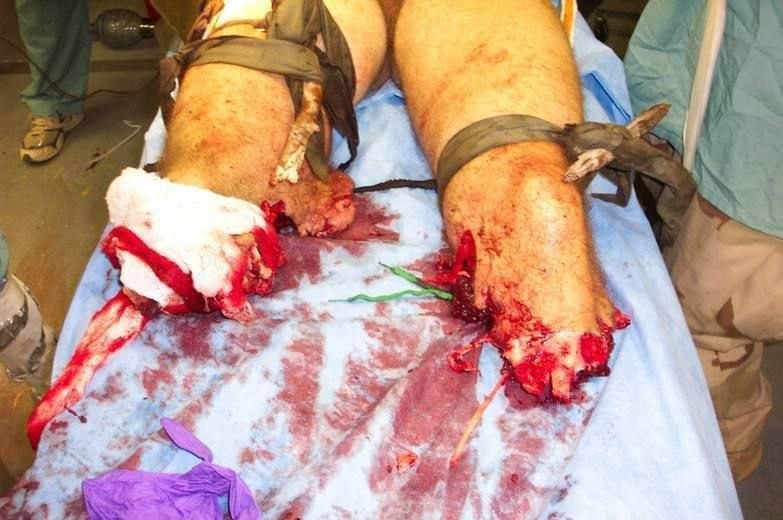
Hemostasis is considered a concept when active bleeding from the wound stops completely: blood is not released even with slight pressure on the surrounding tissue, and a dense dark red or brown thrombus is visible deep in the wound channel, firmly fixed to the blood vessel wall. Another confirmation is the stabilization of the victim's condition - the heart rate drops to a hundred or less beats per minute, the systolic blood pressure rises above 90 millimeters of mercury, consciousness becomes clearer. In field conditions, including in the area of a special military operation, before the start of washing, a technological break of 3-5 minutes is maintained after the blood has stopped so that the blood clot has time to strengthen and does not collapse during manipulation.
Washing of the wound channel is carried out only after reliable bleeding and with care in compliance with gentle techniques aimed at removing contaminants without damaging the clot that has formed. For irrigation, use sterile saline solution (0.9% sodium chloride) or 0.05% chlorhexidine solution, warmed to body temperature (36-38°C), to prevent reflex vasospasm. The jet pressure should be minimal, which is achieved using a 20 milliliter syringe without a needle or a special portable irrigation system. The flow direction is from the center of the wound to the periphery, at an angle of 30-45 degrees to the surface, which allows soil particles, small fragments and bacteria to be washed away without affecting the thrombus area.
Vigorous washing at high pressure, rubbing the wound with tampons or using hydrogen peroxide, which destroys the fibrin matrix of the clot and causes repeated bleeding, is strictly prohibited.