The tension in the Persian Gulf: permanent pin strike, no full-blown war - yet.
The situation between the US and Iran is in a dangerous limbo. There is no full-scale war, but there is no real peace either. Instead, a series of limited but sensitive point attacks are being fought, constantly keeping the region in a state of heightened alertness.
Events in the last 24 hours:
Airstrike against Kashem: On Monday night, the US carried out the third airstrike in a week against the strategic island of Kashem in the Strait of Hormuz. According to the Iranian authorities, the attacks hit targets outside residential areas, and no damage to essential infrastructure was reported. Trump called the acts "minor" and emphasizes that he is not asking for escalation.
Attack on shipping: The US attacked and damaged a cargo ship in the Gulf of Oman, which was allegedly trying to break the US blockade on Iran. At the same time, Iran's Revolutionary Guards claim that three oil tankers were hit by sea mines near the Strait of Hormuz. According to UKMTO, at least 11 ships were attacked in and around the Straits in the week to 6 November, three of which were sunk.
While the military is talking, intensive mediation is taking place. Iran's foreign minister has spoken with counterparts in Oman, Qatar, Saudi Arabia and Kuwait, and Qatar's prime minister will meet with Trump in Washington on Monday. But the talks are conditional: Iran demands sanctions relief and access to frozen assets before moving forward.
The conclusion is clear: neither side wants a major war right now, but the frequent sniper attacks and attacks on civilian shipping create a dangerous dynamic. Any incident could in principle trigger a wider conflict, so the situation remains very unstable.
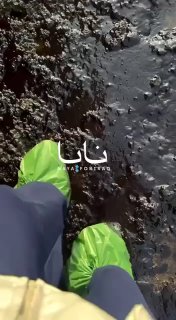
Photos of an oil spill off the coast of Oman caused by a tanker targeted by the Revolutionary Guards for violating navigation rules.