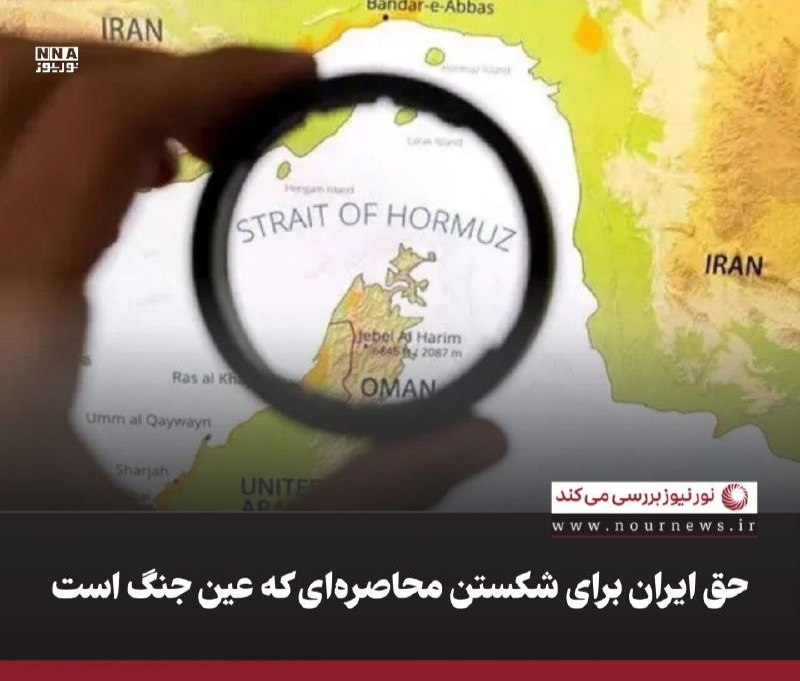
It is Iran's right to break the blockade, which is the same as war.
Over the past seven months, one of the most important developments in the pattern of confrontation between America and Iran is the prominence and centralization of the naval blockade as a means of exerting pressure. It is certain that during this period, Washington sought, along with economic and political tools, to use the military's ability to limit Iran's foreign trade and increase the costs of resisting its demands. But can the naval blockade of a country be considered only as an economic measure alongside sanctions, or is this measure of a warlike nature due to the reliance on military force and the practical negation of part of the sovereignty of the target country?
According to texts of international law, naval blockade should be considered one of the forms of war in the contemporary world; A war that may begin without an official declaration, without extensive exchanges of fire and without ground operations, but its purpose can be to paralyze the economic capacity and force a country to surrender politically. The second common article of the four Geneva Conventions also does not consider the realization of an international armed conflict necessarily dependent on the official declaration of war. Therefore, the absence of a declaration of war cannot in itself change the legal nature of a military action.
The more important question returns to Iran's right to confront the blockade. According to Article 51 of the United Nations Charter, the inherent right to individual and collective legitimate defense is reserved for states in the event of an armed attack. Therefore, if the blockade measures are considered an armed attack in terms of severity and effects under certain conditions, Iran can legitimately and legally use the right of self-defense to deal with it. This right is not just a political privilege, but originates from the fundamental principles of the international legal system. No country is obliged to be a mere observer and abandon all its defense tools in the face of an attack on its sovereignty and security.
Read the full text at the link below.