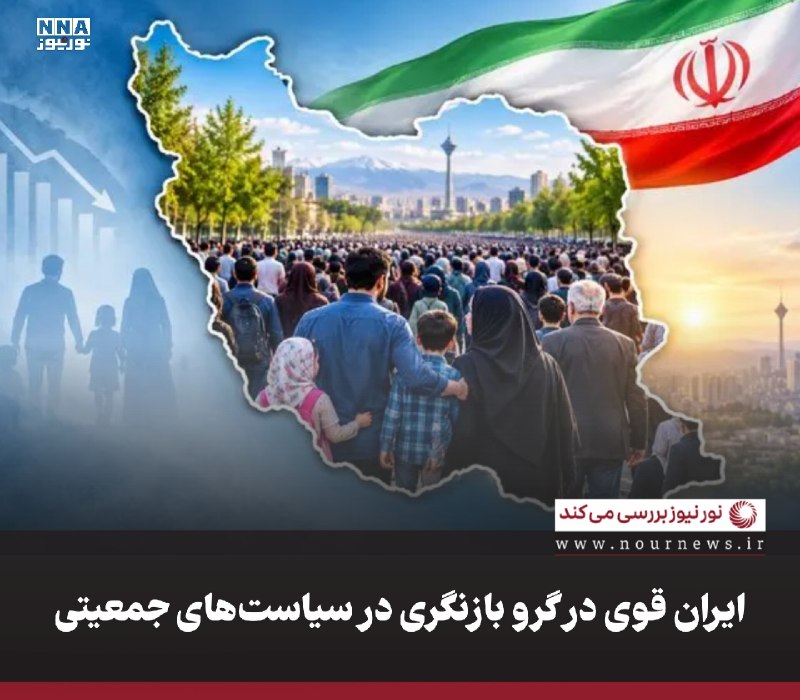
A strong Iran depends on changing the population policy.
The decrease in the fertility rate to 1.34 children per woman in 1,404, the decrease in the number of births and the acceleration of aging faced serious challenges in the demographic structure of Iran; A situation that emphasizes the need to correct the population policy and to provide comprehensive support to the family more than before. This issue was emphasized in the message of the leader of the revolution to the fourth national event of the Jamiat Youth Award. In this message, increasing Iran's future population by maintaining its quantitative and qualitative dimensions is considered one of the most important elements in the country's authority and progress, and the policy of "family-centered population growth" is presented as a strategic and decisive policy.
Part of this message states: "Among the elements of authority and advancement and achieving a stronger Iran, the issue of increasing the future population of dear Iran while maintaining all the desired quantitative and qualitative aspects is considered one of the most important." This emphasis is raised in a situation where the statistics indicate the continuation of the downward trend in fertility in Israel. According to the official sources, the fertility rate of the entire country increased from 1.54 children per woman in 1,402 to 1.44 in 1,403 and 1.34 in 1,404.
What is certain is that Iran's population window is a limited opportunity to take advantage of the ability of the young generation and the working-age population. A decrease in fertility, a decrease in marriage and an increase in older age emphasize the need for simultaneous attention to family formation, child birth, health and social support. As emphasized in the message of the leader of the revolution, population growth with the family at its center should be practiced as a strategic policy; A policy that has been implemented, in addition to the supporting measures, requires the removal of economic and social obstacles to marriage and childbirth and the provision of healthy and high-quality living conditions for all generations.
Read the full text at the link below.